Ice is one of the most common natural elements on Earth, but its name changes from one language to another. If you’re traveling, learning a new language, studying linguistics, or simply curious about global vocabulary, knowing how to say ice in different languages can be both useful and fascinating.
In this guide, you’ll discover 70 translations of ice in different languages, along with easy pronunciations, example sentences, and English meanings. This article is designed to help language learners, travelers, students, and anyone interested in multilingual communication.
If you’ve ever wondered how to say ice in different languages, ice translations, or ice in all languages around the world, this complete list has everything you need.
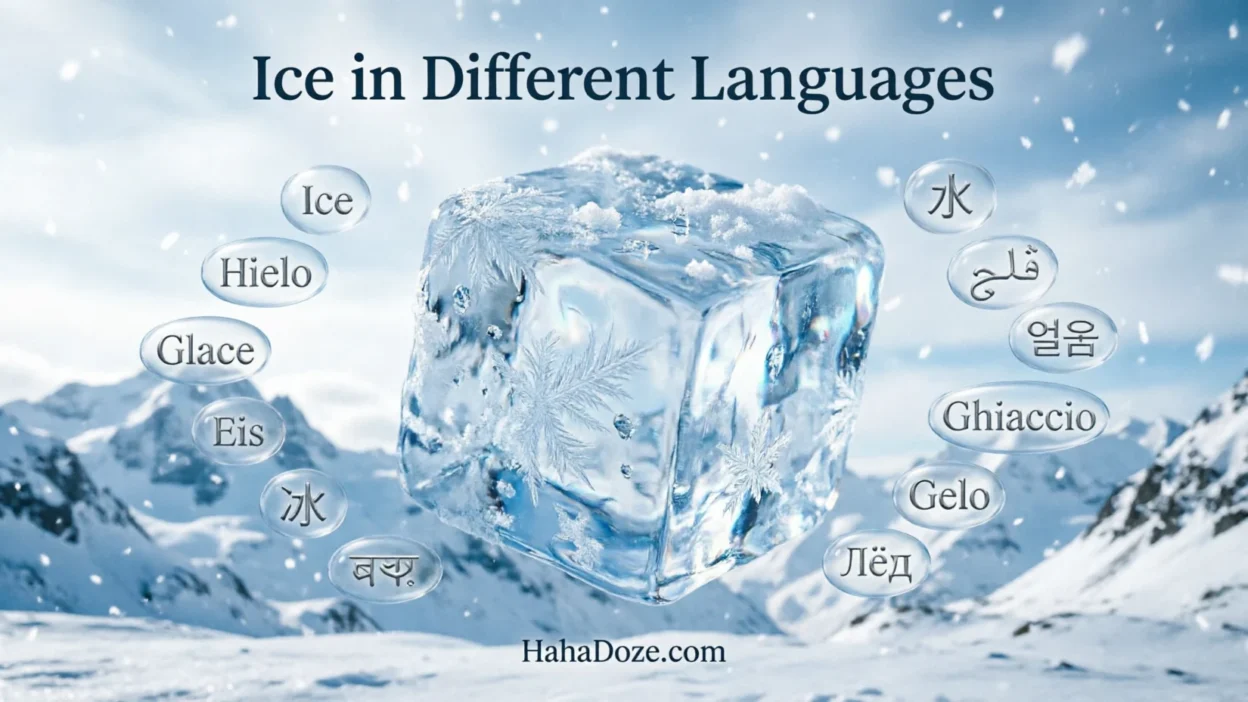
Ice in Different Languages Table
| # | Language | Native Phrase | Easy Pronunciation | Example Sentence | English Meaning |
|---|---|---|---|---|---|
| 1 | English | Ice | Eyes | The ice is melting. | The ice is melting. |
| 2 | Spanish | Hielo | YEH-lo | El hielo está frío. | The ice is cold. |
| 3 | French | Glace | Glass | La glace fond. | The ice is melting. |
| 4 | German | Eis | Ice | Das Eis ist kalt. | The ice is cold. |
| 5 | Italian | Ghiaccio | Gee-AH-cho | Il ghiaccio è duro. | The ice is hard. |
| 6 | Portuguese | Gelo | ZHE-lo | O gelo derrete. | The ice melts. |
| 7 | Dutch | IJs | Ais | Het ijs is glad. | The ice is slippery. |
| 8 | Russian | Лёд | Lyod | Лёд очень холодный. | The ice is very cold. |
| 9 | Ukrainian | Лід | Leed | Лід тане. | The ice is melting. |
| 10 | Polish | Lód | Wood | Lód jest zimny. | The ice is cold. |
| 11 | Czech | Led | Let | Led taje. | The ice is melting. |
| 12 | Slovak | Ľad | Lyad | Ľad je studený. | The ice is cold. |
| 13 | Hungarian | Jég | Yayg | A jég olvad. | The ice is melting. |
| 14 | Romanian | Gheață | GYA-tsa | Gheața este rece. | The ice is cold. |
| 15 | Bulgarian | Лед | Let | Ледът се топи. | The ice is melting. |
| 16 | Serbian | Лед | Led | Лед је хладан. | The ice is cold. |
| 17 | Croatian | Led | Led | Led se topi. | The ice is melting. |
| 18 | Slovenian | Led | Led | Led je mrzel. | The ice is cold. |
| 19 | Bosnian | Led | Led | Led je hladan. | The ice is cold. |
| 20 | Macedonian | Мраз | Mraz | Мразот е ладен. | The ice is cold. |
| 21 | Greek | Πάγος | PA-gos | Ο πάγος λιώνει. | The ice is melting. |
| 22 | Turkish | Buz | Booz | Buz çok soğuk. | The ice is very cold. |
| 23 | Arabic | ثلج | Thalj | الثلج بارد. | The ice is cold. |
| 24 | Hebrew | קרח | Keh-rakh | הקרח נמס. | The ice is melting. |
| 25 | Persian | یخ | Yakh | یخ سرد است. | The ice is cold. |
| 26 | Hindi | बर्फ | Barf | बर्फ ठंडी है। | The ice is cold. |
| 27 | Urdu | برف | Barf | برف ٹھنڈی ہے۔ | The ice is cold. |
| 28 | Punjabi | ਬਰਫ਼ | Baraf | ਬਰਫ਼ ਠੰਡੀ ਹੈ। | The ice is cold. |
| 29 | Bengali | বরফ | Borof | বরফ ঠান্ডা। | The ice is cold. |
| 30 | Gujarati | બરફ | Baraf | બરફ ઠંડો છે. | The ice is cold. |
| 31 | Marathi | बर्फ | Barf | बर्फ थंड आहे. | The ice is cold. |
| 32 | Tamil | பனி | Pani | பனி குளிராக உள்ளது. | The ice is cold. |
| 33 | Telugu | మంచు | Manchu | మంచు చల్లగా ఉంది. | The ice is cold. |
| 34 | Kannada | ಮಂಜು | Manju | ಮಂಜು ತಂಪಾಗಿದೆ. | The ice is cold. |
| 35 | Malayalam | മഞ്ഞ് | Manj | മഞ്ഞ് തണുത്തതാണ്. | The ice is cold. |
| 36 | Sinhala | අයිස් | Ice | අයිස් සීතලයි. | The ice is cold. |
| 37 | Nepali | बरफ | Baraf | बरफ चिसो छ। | The ice is cold. |
| 38 | Chinese (Simplified) | 冰 | Bing | 冰很冷。 | The ice is cold. |
| 39 | Chinese (Traditional) | 冰 | Bing | 冰很冷。 | The ice is cold. |
| 40 | Japanese | 氷 | Kori | 氷は冷たいです。 | The ice is cold. |
| 41 | Korean | 얼음 | Eol-eum | 얼음이 차갑습니다. | The ice is cold. |
| 42 | Vietnamese | Đá | Da | Đá rất lạnh. | The ice is very cold. |
| 43 | Thai | น้ำแข็ง | Nam Khaeng | น้ำแข็งเย็นมาก. | The ice is very cold. |
| 44 | Indonesian | Es | Ess | Es itu dingin. | The ice is cold. |
| 45 | Malay | Ais | Ice | Ais sangat sejuk. | The ice is very cold. |
| 46 | Filipino | Yelo | Yeh-lo | Malamig ang yelo. | The ice is cold. |
| 47 | Swahili | Barafu | Ba-ra-foo | Barafu ni baridi. | The ice is cold. |
| 48 | Afrikaans | Ys | Ace | Die ys smelt. | The ice is melting. |
| 49 | Zulu | Iqhwa | Ee-kwa | Iqhwa liyabanda. | The ice is cold. |
| 50 | Xhosa | Umkhenkce | Oom-khen-kay | Umkhenkce uyabanda. | The ice is cold. |
| 51 | Yoruba | Yinyin | Yin-yin | Yinyin tutu ni. | The ice is cold. |
| 52 | Igbo | Ice | Ice | Ice dị oyi. | The ice is cold. |
| 53 | Hausa | Kankara | Kan-ka-ra | Kankara tana sanyi. | The ice is cold. |
| 54 | Somali | Baraf | Ba-raf | Baraf waa qabow. | The ice is cold. |
| 55 | Amharic | በረዶ | Beredo | በረዶ ቀዝቃዛ ነው። | The ice is cold. |
| 56 | Finnish | Jää | Yaa | Jää sulaa. | The ice is melting. |
| 57 | Swedish | Is | Ees | Isen smälter. | The ice is melting. |
| 58 | Norwegian | Is | Ees | Isen er kald. | The ice is cold. |
| 59 | Danish | Is | Ees | Isen smelter. | The ice is melting. |
| 60 | Icelandic | Ís | Ees | Ísinn bráðnar. | The ice is melting. |
| 61 | Irish | Oighear | Uh-er | Tá an t-oighear fuar. | The ice is cold. |
| 62 | Welsh | Iâ | Yah | Mae’r iâ yn oer. | The ice is cold. |
| 63 | Scottish Gaelic | Deigh | Jay | Tha an deigh fuar. | The ice is cold. |
| 64 | Latvian | Ledus | Leh-doos | Ledus kūst. | The ice is melting. |
| 65 | Lithuanian | Ledas | Leh-das | Ledas tirpsta. | The ice is melting. |
| 66 | Estonian | Jää | Yaa | Jää sulab. | The ice is melting. |
| 67 | Albanian | Akull | Ah-kool | Akulli është i ftohtë. | The ice is cold. |
| 68 | Maltese | Silġ | Silj | Is-silġ kiesaħ. | The ice is cold. |
| 69 | Luxembourgish | Äis | Eyes | D’Äis schmëlzt. | The ice is melting. |
| 70 | Esperanto | Glacio | GLAH-tsee-o | La glacio estas malvarma. | The ice is cold. |
How to Say Ice in Different Languages
The word ice has unique pronunciations across the world. While many European languages have similar-looking words, Asian, African, and Middle Eastern languages use completely different scripts and pronunciations. Learning these translations helps improve communication and expands your vocabulary.
Why Learn Ice Translations?
Learning the word “ice” in multiple languages can help you:
- Communicate while traveling
- Order cold drinks with confidence
- Improve your multilingual vocabulary
- Understand different cultures
- Practice pronunciation in foreign languages
Ice in All Languages Around the World
People use the word “ice” every day in conversations about weather, food, drinks, sports, and science. Although the pronunciation changes from country to country, the meaning remains universal.
Whether you’re studying languages or preparing for international travel, knowing ice in all languages is a practical addition to your vocabulary.
Tips for Remembering Ice in Different Languages
- Practice five new languages each day.
- Repeat the pronunciation aloud.
- Use the example sentences for context.
- Write flashcards with native spellings.
- Review regularly to improve memory.
Common Uses of the Word Ice
The word “ice” appears in many everyday situations:
- Ice cubes in drinks
- Frozen lakes and rivers
- Ice skating
- Ice cream
- Ice packs for injuries
- Winter weather
Conclusion
Learning ice in different languages is an enjoyable way to expand your language skills and understand how people around the world describe this everyday word.
With these 70 translations, pronunciations, and examples, you can confidently recognize and use the word “ice” in many different cultures and conversations.
FAQs:
1. How do you say ice in different languages?
The word “ice” has different translations depending on the language, such as Hielo in Spanish, Glace in French, Eis in German, and 氷 (Kori) in Japanese.
2. Why learn ice translations?
Learning common words like “ice” improves travel communication, language learning, and cultural understanding.
3. Which language uses the word “Hielo” for ice?
Spanish uses the word Hielo for ice.
4. Is the word for ice similar in European languages?
Many European languages have similar words, such as Eis, Is, Led, and Jää, although pronunciation varies.
5. Where can I learn more everyday words in different languages?
Studying multilingual vocabulary lists and practicing common daily words is an excellent way to build language skills.

Evelyn Grace is a language enthusiast and content writer at LingoMean, where she explains the meaning of words, phrases, and expressions. She creates clear, practical, and engaging content that helps readers confidently understand what to say in everyday conversations.