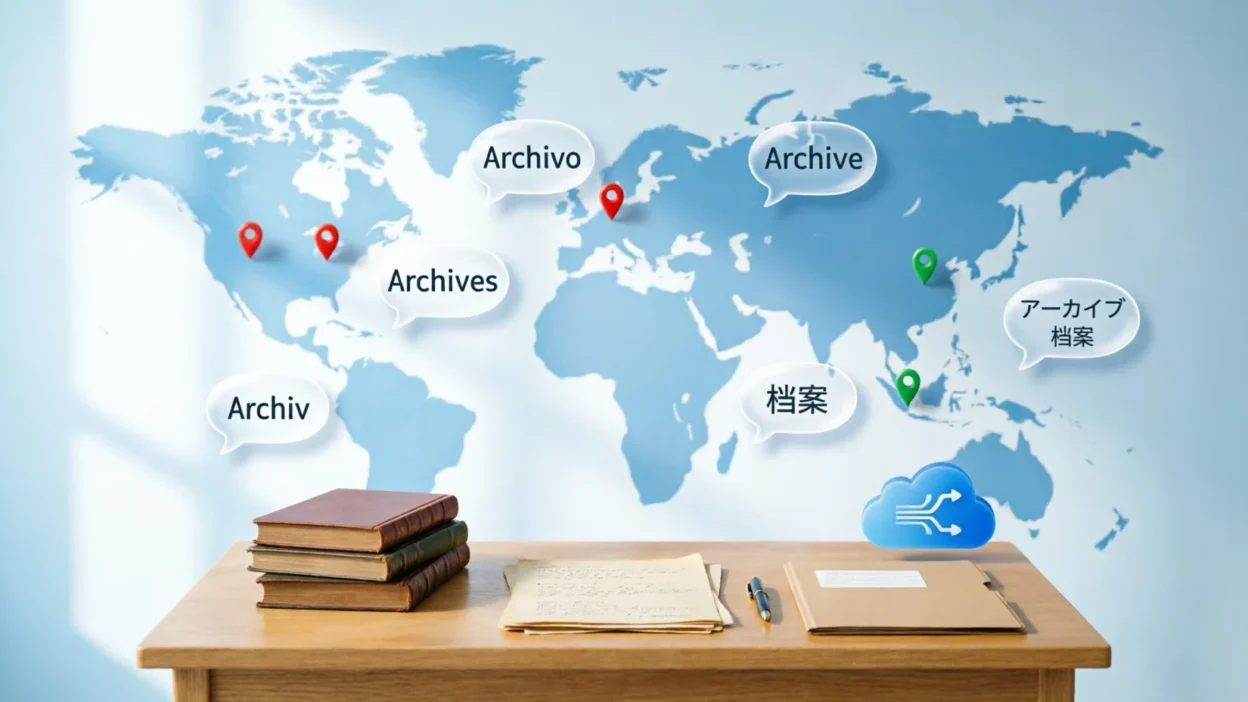
An archive is a place where important records, documents, photos, and digital files are stored for future use.
If you’re a student, researcher, librarian, historian, or simply curious about languages, learning archive in different languages can help you communicate more effectively across cultures.
In this guide, you’ll discover archive translations in 70 different languages, complete with the correct native spelling, easy English pronunciation, and practical example sentences.
This resource is designed to help you understand how to say archive in different languages, making it useful for travel, education, translation projects, and language learning.
The table below is mobile-friendly, easy to read, and optimized to help you quickly find the translation you’re looking for.
| # | Language | Native Phrase | English Pronunciation | Example Sentence | English Meaning |
|---|---|---|---|---|---|
| 1 | English | Archive | AR-kive | The archive contains old maps. | The archive contains old maps. |
| 2 | Spanish | Archivo | Ar-CHEE-vo | El archivo guarda documentos históricos. | The archive keeps historical documents. |
| 3 | French | Archives | Ar-SHEEV | Les archives sont ouvertes. | The archives are open. |
| 4 | German | Archiv | Ar-KHEEF | Das Archiv ist digital. | The archive is digital. |
| 5 | Italian | Archivio | Ar-KEE-vyo | L’archivio è ben organizzato. | The archive is well organized. |
| 6 | Portuguese | Arquivo | Ar-KEE-vo | O arquivo contém fotos antigas. | The archive contains old photos. |
| 7 | Dutch | Archief | Ar-KHEEF | Het archief is veilig. | The archive is secure. |
| 8 | Russian | Архив | Ar-KHEEV | Архив хранит документы. | The archive stores documents. |
| 9 | Ukrainian | Архів | Ar-KHEEV | Архів відкритий. | The archive is open. |
| 10 | Polish | Archiwum | Ar-HEE-voom | Archiwum jest duże. | The archive is large. |
| 11 | Czech | Archiv | Ar-KHEEF | Archiv obsahuje záznamy. | The archive contains records. |
| 12 | Slovak | Archív | Ar-KHEEV | Archív je online. | The archive is online. |
| 13 | Hungarian | Archívum | Ar-HEE-voom | Az archívum régi képeket tartalmaz. | The archive contains old pictures. |
| 14 | Romanian | Arhivă | Ar-HEE-vuh | Arhiva este utilă. | The archive is useful. |
| 15 | Bulgarian | Архив | Ar-KHEEV | Архивът е важен. | The archive is important. |
| 16 | Serbian | Архив | Ar-KHEEV | Архив чува историју. | The archive preserves history. |
| 17 | Croatian | Arhiv | Ar-HEEV | Arhiv je dostupan. | The archive is accessible. |
| 18 | Bosnian | Arhiv | Ar-HEEV | Arhiv sadrži spise. | The archive contains files. |
| 19 | Slovenian | Arhiv | Ar-HEEV | Arhiv je zatvoren. | The archive is closed. |
| 20 | Albanian | Arkiv | Ar-KEEV | Arkivi ruan dokumente. | The archive keeps documents. |
| 21 | Greek | Αρχείο | Ar-KHEE-o | Το αρχείο είναι μεγάλο. | The archive is large. |
| 22 | Turkish | Arşiv | Ar-SHEEV | Arşiv eski belgeler içeriyor. | The archive contains old documents. |
| 23 | Arabic | أرشيف | Ar-sheef | الأرشيف يحتوي على سجلات. | The archive contains records. |
| 24 | Hebrew | ארכיון | Ar-khee-YON | הארכיון פתוח. | The archive is open. |
| 25 | Persian | آرشیو | Ar-SHEEV | آرشیو کامل است. | The archive is complete. |
| 26 | Urdu | آرکائیو | Ar-KAI-yoo | آرکائیو محفوظ ہے۔ | The archive is محفوظ. |
| 27 | Hindi | अभिलेखागार | Abhi-lekh-a-gaar | अभिलेखागार में रिकॉर्ड हैं। | The archive has records. |
| 28 | Punjabi | ਅਭਿਲੇਖਾਗਾਰ | Abhi-lekh-a-gaar | ਅਭਿਲੇਖਾਗਾਰ ਵਿੱਚ ਰਿਕਾਰਡ ਹਨ। | The archive contains records. |
| 29 | Bengali | আর্কাইভ | Ar-kaiv | আর্কাইভে তথ্য আছে। | The archive has information. |
| 30 | Gujarati | આર્કાઇવ | Ar-kaiv | આર્કાઇવ સુરક્ષિત છે. | The archive is secure. |
| 31 | Marathi | संग्रहालयीन अभिलेख | Sangrah-a-lay Abhi-lekh | अभिलेख सुरक्षित आहेत. | The archives are safe. |
| 32 | Tamil | காப்பகம் | Kaa-pa-gam | காப்பகம் திறந்துள்ளது. | The archive is open. |
| 33 | Telugu | ఆర్కైవ్ | Ar-kaiv | ఆర్కైవ్లో పత్రాలు ఉన్నాయి. | The archive has documents. |
| 34 | Kannada | ಆರ್ಕೈವ್ | Ar-kaiv | ಆರ್ಕೈವ್ ಸುರಕ್ಷಿತವಾಗಿದೆ. | The archive is secure. |
| 35 | Malayalam | ആർക്കൈവ് | Ar-kaiv | ആർക്കൈവ് പഴയ രേഖകൾ സൂക്ഷിക്കുന്നു. | The archive stores old records. |
| 36 | Odia | ଆର୍କାଇଭ୍ | Ar-kaiv | ଆର୍କାଇଭ୍ ଖୋଲା ଅଛି। | The archive is open. |
| 37 | Assamese | আৰ্কাইভ | Ar-kaiv | আৰ্কাইভত নথি আছে। | The archive has records. |
| 38 | Nepali | अभिलेखागार | Abhi-le-kha-gaar | अभिलेखागार खुला छ। | The archive is open. |
| 39 | Sinhala | ලේඛනාගාරය | Lekh-na-gaa-ra-ya | ලේඛනාගාරය වැදගත්ය. | The archive is important. |
| 40 | Burmese | မော်ကွန်းတိုက် | Maw-kone-tike | မော်ကွန်းတိုက်ဖွင့်ထားသည်။ | The archive is open. |
| 41 | Thai | หอจดหมายเหตุ | Hor Jot Mai Het | หอจดหมายเหตุมีเอกสารเก่า | The archive has old documents. |
| 42 | Lao | ຫໍຈົດໝາຍເຫດ | Hor Jot Mai Het | ຫໍຈົດໝາຍເຫດເປີດແລ້ວ. | The archive is open. |
| 43 | Khmer | បណ្ណសារ | Ban-na-saa | បណ្ណសារមានឯកសារ។ | The archive has documents. |
| 44 | Vietnamese | Lưu trữ | Loo Truh | Kho lưu trữ rất lớn. | The archive is very large. |
| 45 | Indonesian | Arsip | Ar-seep | Arsip berisi dokumen. | The archive contains documents. |
| 46 | Malay | Arkib | Ar-keeb | Arkib menyimpan rekod. | The archive stores records. |
| 47 | Filipino | Arkibo | Ar-KEE-bo | Ang arkibo ay kumpleto. | The archive is complete. |
| 48 | Chinese (Simplified) | 档案馆 | Dang An Guan | 档案馆保存历史。 | The archive preserves history. |
| 49 | Chinese (Traditional) | 檔案館 | Dang An Guan | 檔案館保存文件。 | The archive preserves documents. |
| 50 | Japanese | アーカイブ | Aa-ka-i-bu | アーカイブを確認してください。 | Please check the archive. |
| 51 | Korean | 아카이브 | A-ka-i-beu | 아카이브를 열어 보세요. | Open the archive. |
| 52 | Mongolian | Архив | Ar-kheev | Архивт баримт бий. | The archive has documents. |
| 53 | Kazakh | Мұрағат | Moo-ra-ghat | Мұрағат ашық. | The archive is open. |
| 54 | Uzbek | Arxiv | Ar-kheev | Arxiv eski hujjatlarni saqlaydi. | The archive stores old documents. |
| 55 | Turkmen | Arhiw | Ar-heev | Arhiw möhümdir. | The archive is important. |
| 56 | Kyrgyz | Архив | Ar-kheev | Архивде маалымат бар. | The archive has information. |
| 57 | Tajik | Бойгонӣ | Boy-go-nee | Бойгонӣ кушода аст. | The archive is open. |
| 58 | Azerbaijani | Arxiv | Ar-heev | Arxiv sənədləri saxlayır. | The archive stores documents. |
| 59 | Georgian | არქივი | Ar-ki-vi | არქივი ღიაა. | The archive is open. |
| 60 | Armenian | Արխիվ | Ar-kheev | Արխիվը կարևոր է։ | The archive is important. |
| 61 | Swahili | Kumbukumbu | Koom-boo-KOOM-boo | Kumbukumbu zina historia. | The archive holds history. |
| 62 | Zulu | Ingobo yomlando | In-go-bo Yo-MLAN-do | Ingobo yomlando ivuliwe. | The archive is open. |
| 63 | Xhosa | Uvimba-mbali | Oo-veem-ba M-ba-li | Uvimba-mbali ugcina iincwadi. | The archive keeps records. |
| 64 | Afrikaans | Argief | Ar-KHEEF | Die argief is veilig. | The archive is safe. |
| 65 | Somali | Kayd | Kide | Kaydku waa muhiim. | The archive is important. |
| 66 | Finnish | Arkisto | Ar-kis-to | Arkisto sisältää tiedostoja. | The archive contains files. |
| 67 | Swedish | Arkiv | Ar-KHEEV | Arkivet är öppet. | The archive is open. |
| 68 | Norwegian | Arkiv | Ar-KHEEV | Arkivet har gamle filer. | The archive has old files. |
| 69 | Danish | Arkiv | Ar-KHEEV | Arkivet er digitalt. | The archive is digital. |
| 70 | Icelandic | Skjalasafn | Skya-la-safn | Skjalasafnið er opið. | The archive is open. |
Why Learn “Archive” in Different Languages?
Learning how to say archive in different languages is useful in many real-world situations. If you’re working with historical records, managing digital files, studying abroad, or translating documents, knowing the correct term can make communication much easier.
Here are some of the main benefits:
- Improve communication with people from different countries.
- Understand library, museum, and government records.
- Help with translation and localization projects.
- Learn new vocabulary while studying foreign languages.
- Make international research easier.
- Use the correct word in academic and professional settings.
How Is the Word “Archive” Used Around the World?
Although the meaning of archive is similar worldwide, different cultures may use the word in slightly different contexts.
For example:
- Libraries use archives to preserve rare books and manuscripts.
- Museums archive historical artifacts and photographs.
- Governments keep archives for official records and legal documents.
- Businesses archive contracts, invoices, and employee files.
- Digital platforms archive emails, messages, websites, and multimedia content.
In every language, the core meaning remains the same: a place where important information is preserved for future reference.
Common Uses of the Word “Archive”
The word archive appears in many everyday situations, including:
- Digital file storage
- Historical document collections
- University libraries
- Government record offices
- Museums and cultural institutions
- Newspaper collections
- Email archives
- Cloud storage systems
- Website backups
- Family photo collections
Tips for Remembering “Archive” in Different Languages
If you’re learning languages, these simple techniques can help you remember the translations:
- Practice a few languages each day.
- Read the native spelling aloud.
- Repeat the English pronunciation several times.
- Create your own sentences using the word.
- Review the translations regularly.
- Compare similar words across languages.
- Use flashcards or language-learning apps for revision.
Conclusion
Knowing archive in different languages is valuable for students, travelers, researchers, translators, librarians, and professionals who work with records or digital information.
Since many languages share similar forms of the word, learning these translations becomes easier than expected.
Keep this guide as a quick reference whenever you need archive translations, and you’ll be able to communicate the concept confidently in dozens of languages around the world.
FAQs:
1. What does “archive” mean?
An archive is a collection of important documents, records, photographs, or digital files that are preserved for future use.
2. How do you say “archive” in different languages?
The word varies by language, such as Archivo in Spanish, Archives in French, Archiv in German, and アーカイブ in Japanese.
3. Why are archives important?
Archives preserve historical, legal, educational, and cultural information so it can be accessed in the future.
4. Is the word “archive” similar in many languages?
Yes. Many European and Asian languages use words derived from the same historical root, making them quite similar in spelling and pronunciation.
5. Who can benefit from learning “archive” in different languages?
Students, researchers, travelers, translators, librarians, educators, and anyone working with international documents can benefit from knowing these translations.

Anthony Dylan is a language enthusiast and content writer at LingoMean, where he helps readers understand what to say in different situations. He creates clear, practical, and engaging guides that improve communication, confidence, and everyday conversations.