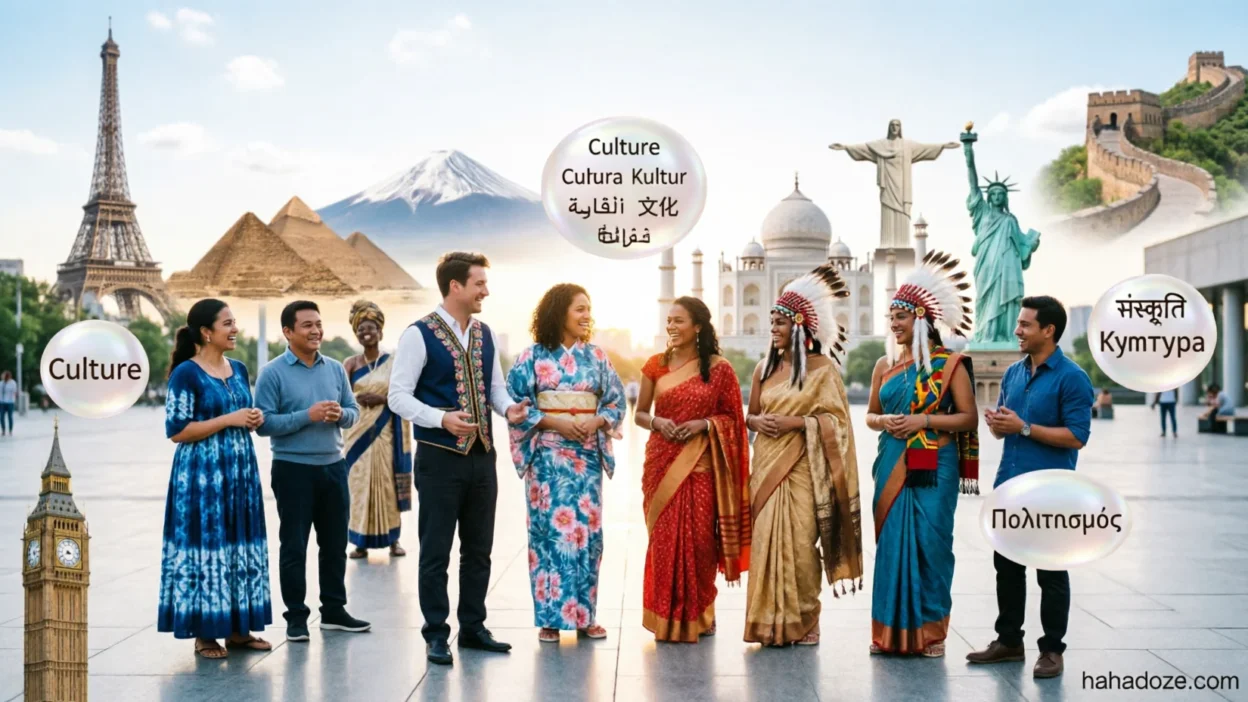
Culture is one of the most meaningful words in any language. It represents the traditions, customs, beliefs, arts, values, and way of life shared by a group of people.
Learning how to say culture in different languages helps you better understand diverse societies and communicate more effectively with people from around the world.
In this guide, you’ll discover 70 accurate translations of the word “culture” along with easy English pronunciations, real-life example sentences, and their English meanings.
If you’re a student, traveler, researcher, or language enthusiast, this guide will help you learn culture in all languages quickly and easily.
If you’re searching for how to say culture in different languages, culture translations, or culture around the world, this comprehensive table provides everything you need in one place.
| # | Language | Native Translation | Pronunciation | Example Sentence | English Meaning |
| 1 | English | Culture | KUL-cher | Every country has a unique culture. | Every country has a unique culture. |
| 2 | Spanish | Cultura | Kool-TOO-ra | La cultura es importante. | Culture is important. |
| 3 | French | Culture | Kuhl-TYOOR | La culture est riche. | The culture is rich. |
| 4 | German | Kultur | Kool-TOOR | Die Kultur ist faszinierend. | The culture is fascinating. |
| 5 | Italian | Cultura | Kool-TOO-ra | La cultura italiana è famosa. | Italian culture is famous. |
| 6 | Portuguese | Cultura | Kool-TOO-ra | A cultura brasileira é diversa. | Brazilian culture is diverse. |
| 7 | Dutch | Cultuur | Kul-TUUR | De cultuur is interessant. | The culture is interesting. |
| 8 | Russian | Культура | Kool-TOO-ra | Русская культура богата. | Russian culture is rich. |
| 9 | Ukrainian | Культура | Kool-TOO-ra | Українська культура унікальна. | Ukrainian culture is unique. |
| 10 | Polish | Kultura | Kool-TOO-ra | Polska kultura jest piękna. | Polish culture is beautiful. |
| 11 | Czech | Kultura | Kool-TOO-ra | Česká kultura je bohatá. | Czech culture is rich. |
| 12 | Slovak | Kultúra | Kool-TOO-ra | Kultúra je dôležitá. | Culture is important. |
| 13 | Slovenian | Kultura | Kool-TOO-ra | Njihova kultura je zanimiva. | Their culture is interesting. |
| 14 | Croatian | Kultura | Kool-TOO-ra | Hrvatska kultura je bogata. | Croatian culture is rich. |
| 15 | Serbian | Култура | Kool-TOO-ra | Српска култура је позната. | Serbian culture is well known. |
| 16 | Bosnian | Kultura | Kool-TOO-ra | Kultura je važna. | Culture is important. |
| 17 | Romanian | Cultură | Kool-TOO-ruh | Cultura română este frumoasă. | Romanian culture is beautiful. |
| 18 | Bulgarian | Култура | Kool-TOO-ra | Българската култура е богата. | Bulgarian culture is rich. |
| 19 | Greek | Πολιτισμός | Po-lee-ti-SMOS | Ο πολιτισμός είναι σημαντικός. | Culture is important. |
| 20 | Turkish | Kültür | KUL-tur | Türk kültürü çok zengindir. | Turkish culture is very rich. |
| 21 | Arabic | ثقافة | Tha-QA-fa | الثقافة مهمة. | Culture is important. |
| 22 | Hebrew | תרבות | Tar-BOOT | התרבות מעניינת. | The culture is interesting. |
| 23 | Persian | فرهنگ | Far-HANG | فرهنگ ایران غنی است. | Iranian culture is rich. |
| 24 | Hindi | संस्कृति | Sans-kri-ti | भारतीय संस्कृति महान है। | Indian culture is great. |
| 25 | Urdu | ثقافت | Sa-QA-fat | پاکستانی ثقافت بہت خوبصورت ہے۔ | Pakistani culture is very beautiful. |
| 26 | Punjabi | ਸਭਿਆਚਾਰ | Sabh-ya-CHAR | ਪੰਜਾਬੀ ਸਭਿਆਚਾਰ ਬਹੁਤ ਅਮੀਰ ਹੈ। | Punjabi culture is very rich. |
| 27 | Bengali | সংস্কৃতি | Shong-skri-ti | বাংলা সংস্কৃতি সমৃদ্ধ। | Bengali culture is rich. |
| 28 | Gujarati | સંસ્કૃતિ | Sun-skru-ti | ગુજરાતી સંસ્કૃતિ પ્રસિદ્ધ છે. | Gujarati culture is famous. |
| 29 | Marathi | संस्कृती | Sun-skru-TEE | मराठी संस्कृती समृद्ध आहे. | Marathi culture is rich. |
| 30 | Tamil | கலாச்சாரம் | Ka-la-CHAA-ram | தமிழ் கலாச்சாரம் பழமையானது. | Tamil culture is ancient. |
| 31 | Telugu | సంస్కృతి | Sun-skru-ti | తెలుగు సంస్కృతి గొప్పది. | Telugu culture is great. |
| 32 | Kannada | ಸಂಸ್ಕೃತಿ | Sun-skru-ti | ಕನ್ನಡ ಸಂಸ್ಕೃತಿ ಶ್ರೀಮಂತವಾಗಿದೆ. | Kannada culture is rich. |
| 33 | Malayalam | സംസ്കാരം | Sun-skaa-ram | മലയാള സംസ്കാരം പ്രശസ്തമാണ്. | Malayalam culture is famous. |
| 34 | Sinhala | සංස්කෘතිය | Sun-skru-thi-ya | ශ්රී ලාංකීය සංස්කෘතිය සුන්දරයි. | Sri Lankan culture is beautiful. |
| 35 | Nepali | संस्कृति | Sun-skri-ti | नेपाली संस्कृति समृद्ध छ। | Nepali culture is rich. |
| 36 | Chinese (Simplified) | 文化 | Wen-HWA | 中国文化历史悠久。 | Chinese culture has a long history. |
| 37 | Chinese (Traditional) | 文化 | Wen-HWA | 中華文化非常豐富。 | Chinese culture is very rich. |
| 38 | Japanese | 文化 | Bun-ka | 日本の文化は美しいです。 | Japanese culture is beautiful. |
| 39 | Korean | 문화 | Moon-HWA | 한국 문화는 세계적으로 유명합니다. | Korean culture is famous worldwide. |
| 40 | Vietnamese | Văn hóa | Van-HOA | Văn hóa Việt Nam rất đặc sắc. | Vietnamese culture is unique. |
| 41 | Thai | วัฒนธรรม | Wat-ta-na-tham | วัฒนธรรมไทยสวยงาม | Thai culture is beautiful. |
| 42 | Indonesian | Budaya | Boo-DA-ya | Budaya Indonesia sangat beragam. | Indonesian culture is very diverse. |
| 43 | Malay | Budaya | Boo-DA-ya | Budaya Malaysia sangat unik. | Malaysian culture is unique. |
| 44 | Filipino | Kultura | Kool-TOO-ra | Mahalaga ang kultura. | Culture is important. |
| 45 | Swahili | Utamaduni | Oo-ta-ma-DOO-ni | Utamaduni wa Kenya ni mzuri. | Kenyan culture is beautiful. |
| 46 | Afrikaans | Kultuur | Kul-TUUR | Die kultuur is uniek. | The culture is unique. |
| 47 | Zulu | Isiko | Ee-SEE-ko | Isiko lethu lihle. | Our culture is beautiful. |
| 48 | Xhosa | Inkcubeko | In-ku-BE-ko | Inkcubeko yethu ibalulekile. | Our culture is important. |
| 49 | Yoruba | Àṣà | A-sha | Àṣà wa lẹ́wà. | Our culture is beautiful. |
| 50 | Hausa | Al’ada | Al-A-da | Al’adarmu tana da kyau. | Our culture is beautiful. |
| 51 | Amharic | ባህል | Ba-HIL | ባህላችን በጣም ቆንጆ ነው። | Our culture is very beautiful. |
| 52 | Somali | Dhaqan | Dha-QAN | Dhaqankeennu waa hodan. | Our culture is rich. |
| 53 | Finnish | Kulttuuri | Kul-TOO-ri | Suomalainen kulttuuri on ainutlaatuinen. | Finnish culture is unique. |
| 54 | Swedish | Kultur | Kul-TUUR | Svensk kultur är rik. | Swedish culture is rich. |
| 55 | Norwegian | Kultur | Kul-TUR | Norsk kultur er interessant. | Norwegian culture is interesting. |
| 56 | Danish | Kultur | Kul-TUR | Dansk kultur er spændende. | Danish culture is fascinating. |
| 57 | Icelandic | Menning | MEN-ning | Íslensk menning er sérstök. | Icelandic culture is unique. |
| 58 | Estonian | Kultuur | Kul-TUUR | Eesti kultuur on rikas. | Estonian culture is rich. |
| 59 | Latvian | Kultūra | Kul-TOO-ra | Latvijas kultūra ir bagāta. | Latvian culture is rich. |
| 60 | Lithuanian | Kultūra | Kul-TOO-ra | Lietuvos kultūra yra įdomi. | Lithuanian culture is interesting. |
| 61 | Irish | Cultúr | Kul-TOOR | Tá cultúr na hÉireann saibhir. | Irish culture is rich. |
| 62 | Welsh | Diwylliant | Dee-WUTH-yant | Mae diwylliant Cymru yn arbennig. | Welsh culture is special. |
| 63 | Basque | Kultura | Kul-TOO-ra | Euskal kultura aberatsa da. | Basque culture is rich. |
| 64 | Catalan | Cultura | Kool-TOO-ra | La cultura catalana és única. | Catalan culture is unique. |
| 65 | Galician | Cultura | Kool-TOO-ra | A cultura galega é rica. | Galician culture is rich. |
| 66 | Maltese | Kultura | Kool-TOO-ra | Il-kultura hija importanti. | Culture is important. |
| 67 | Albanian | Kulturë | Kool-TUR | Kultura shqiptare është e pasur. | Albanian culture is rich. |
| 68 | Mongolian | Соёл | Soyol | Монголын соёл өвөрмөц. | Mongolian culture is unique. |
| 69 | Kazakh | Мәдениет | Ma-de-ni-YET | Қазақ мәдениеті бай. | Kazakh culture is rich. |
| 70 | Uzbek | Madaniyat | Ma-da-ni-YAT | O’zbek madaniyati boy. | Uzbek culture is rich. |
What Does Culture Mean?
Culture refers to the shared customs, traditions, beliefs, values, language, art, food, music, and lifestyle of a group of people. It shapes the identity of communities and is passed down from one generation to another.
Understanding culture helps us appreciate diversity and build stronger connections with people from different backgrounds.
How to Say Culture in Different Languages
The word culture has different translations around the world, but its meaning remains similar across most languages. Learning culture in different languages is valuable for language learners, travelers, educators, researchers, and anyone interested in global communication.
Culture Around the World
Every country has its own unique culture. From traditional festivals and clothing to local cuisine and customs, cultures reflect the history and values of different societies. Exploring culture around the world helps people develop respect, understanding, and appreciation for diversity.
Why Learn Culture Translations?
Learning culture translations offers many benefits:
- Expand your international vocabulary.
- Improve communication with people from different countries.
- Better understand world history and traditions.
- Support language learning and academic studies.
- Increase cultural awareness while traveling.
Common Uses of the Word “Culture”
The word culture is commonly used in discussions about:
- National culture
- Cultural traditions
- Art and literature
- Music and dance
- Language and heritage
- Social values
- Anthropology
- Education
Conclusion
Learning culture in different languages is a great way to expand your vocabulary and gain a deeper understanding of the world’s diverse communities.
If you’re traveling, studying languages, or exploring global traditions, these culture translations around the world provide a helpful reference for communicating across cultures.
FAQs:
1. How do you say culture in different languages?
The word culture is translated differently in each language, such as Cultura in Spanish, Kultur in German, 文化 in Chinese, 文化 (Bunka) in Japanese, and ثقافة in Arabic.
2. Why should I learn culture in different languages?
Learning these translations helps improve language skills, supports travel, and increases understanding of global customs and traditions.
3. Is the meaning of culture the same in every language?
Although the pronunciation and spelling differ, the general meaning of culture remains similar and refers to the traditions, beliefs, and way of life of a community.
4. Which language has the easiest word for culture?
Many European languages use similar words, such as Cultura, Culture, and Kultur, making them easy to recognize.
5. How can learning culture translations help travelers?
Knowing local words related to culture helps travelers communicate more effectively, understand traditions, and show respect for local communities.

Brandon Cody is the Administrator of LingoMean, a platform dedicated to helping people discover the right words for every situation. He oversees content quality, website management, and user experience, ensuring readers receive accurate, practical, and easy-to-understand communication guidance.