Clothes in different languages is a popular topic for travelers, language learners, students, and anyone interested in global cultures. Learning how to say “clothes” in multiple languages helps you communicate better while shopping, traveling, or studying foreign languages.
If you want to know clothes translations, understand clothes in all languages, or simply discover how people around the world refer to clothing, this complete guide has you covered.
Below, you’ll find a carefully organized table featuring exactly 70 languages, including the native translation, pronunciation, a simple real-life example, and its English meaning.
Clothes in Different Languages (70 Languages)
| # | Language | Native Phrase | Easy Pronunciation | Example Sentence | English Meaning |
|---|---|---|---|---|---|
| 1 | English | Clothes | Klohz | I bought new clothes. | I bought new clothes. |
| 2 | Spanish | Ropa | ROH-pah | Compré ropa nueva. | I bought new clothes. |
| 3 | French | Vêtements | Vet-mahn | J’ai acheté des vêtements. | I bought clothes. |
| 4 | German | Kleidung | KLY-dung | Ich brauche neue Kleidung. | I need new clothes. |
| 5 | Italian | Vestiti | Ves-TEE-tee | Ho comprato vestiti nuovi. | I bought new clothes. |
| 6 | Portuguese | Roupa | HOH-pah | Comprei roupa nova. | I bought new clothes. |
| 7 | Dutch | Kleding | KLAY-ding | Ik koop nieuwe kleding. | I buy new clothes. |
| 8 | Russian | Одежда | A-DYEZH-da | Я купил новую одежду. | I bought new clothes. |
| 9 | Ukrainian | Одяг | OH-dyah | Я купив новий одяг. | I bought new clothes. |
| 10 | Polish | Ubrania | Oo-BRAH-nya | Kupiłem nowe ubrania. | I bought new clothes. |
| 11 | Czech | Oblečení | Ob-leh-CHEN-ee | Koupil jsem nové oblečení. | I bought new clothes. |
| 12 | Slovak | Oblečenie | Ob-leh-CHE-nee-eh | Kúpil som nové oblečenie. | I bought new clothes. |
| 13 | Hungarian | Ruha | ROO-hah | Új ruhát vettem. | I bought new clothes. |
| 14 | Romanian | Haine | HI-ne | Am cumpărat haine noi. | I bought new clothes. |
| 15 | Bulgarian | Дрехи | DREH-hee | Купих нови дрехи. | I bought new clothes. |
| 16 | Serbian | Одећа | OH-de-cha | Kupio sam novu odeću. | I bought new clothes. |
| 17 | Croatian | Odjeća | OD-ye-cha | Kupio sam novu odjeću. | I bought new clothes. |
| 18 | Bosnian | Odjeća | OD-ye-cha | Kupio sam novu odjeću. | I bought new clothes. |
| 19 | Slovenian | Oblačila | Ob-lah-CHEE-lah | Kupil sem nova oblačila. | I bought new clothes. |
| 20 | Greek | Ρούχα | ROO-ha | Αγόρασα καινούρια ρούχα. | I bought new clothes. |
| 21 | Turkish | Giysiler | Gee-see-LER | Yeni giysiler aldım. | I bought new clothes. |
| 22 | Albanian | Rroba | RRO-bah | Bleva rroba të reja. | I bought new clothes. |
| 23 | Lithuanian | Drabužiai | Drah-boo-ZHYE | Pirkau naujus drabužius. | I bought new clothes. |
| 24 | Latvian | Drēbes | DRAY-bes | Es nopirku jaunas drēbes. | I bought new clothes. |
| 25 | Estonian | Riided | REE-dehd | Ostsin uued riided. | I bought new clothes. |
| 26 | Finnish | Vaatteet | VAHT-teyt | Ostin uudet vaatteet. | I bought new clothes. |
| 27 | Swedish | Kläder | KLEH-der | Jag köpte nya kläder. | I bought new clothes. |
| 28 | Norwegian | Klær | Klair | Jeg kjøpte nye klær. | I bought new clothes. |
| 29 | Danish | Tøj | Toy | Jeg købte nyt tøj. | I bought new clothes. |
| 30 | Icelandic | Föt | Fert | Ég keypti ný föt. | I bought new clothes. |
| 31 | Irish | Éadaí | AY-dee | Cheannaigh mé éadaí nua. | I bought new clothes. |
| 32 | Welsh | Dillad | DILL-ad | Prynais ddillad newydd. | I bought new clothes. |
| 33 | Scottish Gaelic | Aodach | OO-dakh | Cheannaich mi aodach ùr. | I bought new clothes. |
| 34 | Maltese | Ħwejjeġ | HWAY-yeg | Xtrajt ħwejjeġ ġodda. | I bought new clothes. |
| 35 | Arabic | ملابس | Ma-LA-bis | اشتريت ملابس جديدة. | I bought new clothes. |
| 36 | Hebrew | בגדים | Be-ga-DEEM | קניתי בגדים חדשים. | I bought new clothes. |
| 37 | Persian | لباس | Leh-BAAS | لباس جدید خریدم. | I bought new clothes. |
| 38 | Urdu | کپڑے | Kap-ray | میں نے نئے کپڑے خریدے۔ | I bought new clothes. |
| 39 | Hindi | कपड़े | Kap-day | मैंने नए कपड़े खरीदे। | I bought new clothes. |
| 40 | Punjabi | ਕੱਪੜੇ | Kap-ray | ਮੈਂ ਨਵੇਂ ਕੱਪੜੇ ਖਰੀਦੇ। | I bought new clothes. |
| 41 | Bengali | কাপড় | Ka-por | আমি নতুন কাপড় কিনেছি। | I bought new clothes. |
| 42 | Gujarati | કપડાં | Kap-da | મેં નવા કપડાં ખરીદ્યા. | I bought new clothes. |
| 43 | Marathi | कपडे | Kap-day | मी नवीन कपडे घेतले. | I bought new clothes. |
| 44 | Nepali | लुगा | Loo-ga | मैले नयाँ लुगा किनें। | I bought new clothes. |
| 45 | Sinhala | ඇඳුම් | En-doom | මම අලුත් ඇඳුම් ගත්තා. | I bought new clothes. |
| 46 | Tamil | ஆடைகள் | Aa-dai-gal | நான் புதிய ஆடைகள் வாங்கினேன். | I bought new clothes. |
| 47 | Telugu | బట్టలు | Bat-ta-loo | నేను కొత్త బట్టలు కొన్నాను. | I bought new clothes. |
| 48 | Kannada | ಬಟ್ಟೆಗಳು | Bat-ta-gay-loo | ನಾನು ಹೊಸ ಬಟ್ಟೆಗಳನ್ನು ಕೊಂಡೆ. | I bought new clothes. |
| 49 | Malayalam | വസ്ത്രങ്ങൾ | Vas-thra-ngal | ഞാൻ പുതിയ വസ്ത്രങ്ങൾ വാങ്ങി. | I bought new clothes. |
| 50 | Odia | ପୋଷାକ | Po-shak | ମୁଁ ନୂଆ ପୋଷାକ କିଣିଲି। | I bought new clothes. |
| 51 | Assamese | কাপোৰ | Ka-por | মই নতুন কাপোৰ কিনিলোঁ। | I bought new clothes. |
| 52 | Chinese (Simplified) | 衣服 | EE-foo | 我买了新衣服。 | I bought new clothes. |
| 53 | Japanese | 服 | Fuku | 新しい服を買いました。 | I bought new clothes. |
| 54 | Korean | 옷 | Oht | 새 옷을 샀어요. | I bought new clothes. |
| 55 | Vietnamese | Quần áo | Kwan Ow | Tôi mua quần áo mới. | I bought new clothes. |
| 56 | Thai | เสื้อผ้า | Sue-a Pa | ฉันซื้อเสื้อผ้าใหม่ | I bought new clothes. |
| 57 | Indonesian | Pakaian | Pa-KAI-an | Saya membeli pakaian baru. | I bought new clothes. |
| 58 | Malay | Pakaian | Pa-KAI-an | Saya membeli pakaian baharu. | I bought new clothes. |
| 59 | Filipino | Damit | Da-meet | Bumili ako ng bagong damit. | I bought new clothes. |
| 60 | Khmer | សម្លៀកបំពាក់ | Som-liek Bom-peak | ខ្ញុំទិញសម្លៀកបំពាក់ថ្មី។ | I bought new clothes. |
| 61 | Lao | ເສື້ອຜ້າ | Suea Pha | ຂ້ອຍຊື້ເສື້ອຜ້າໃໝ່. | I bought new clothes. |
| 62 | Burmese | အဝတ်အစား | A-wut A-sa | အဝတ်အသစ်ဝယ်ခဲ့တယ်။ | I bought new clothes. |
| 63 | Mongolian | Хувцас | Khoov-tsas | Би шинэ хувцас авсан. | I bought new clothes. |
| 64 | Swahili | Nguo | NGWO | Nilinunua nguo mpya. | I bought new clothes. |
| 65 | Zulu | Izingubo | Ee-zing-GOO-bo | Ngithenge izingubo ezintsha. | I bought new clothes. |
| 66 | Afrikaans | Klere | KLEE-re | Ek het nuwe klere gekoop. | I bought new clothes. |
| 67 | Yoruba | Aṣọ | A-shaw | Mo ra aṣọ tuntun. | I bought new clothes. |
| 68 | Hausa | Tufafi | Too-FA-fee | Na sayi tufafi sabbi. | I bought new clothes. |
| 69 | Amharic | ልብስ | Libs | አዲስ ልብስ ገዛሁ። | I bought new clothes. |
| 70 | Somali | Dharka | DHAR-ka | Waxaan iibsaday dhar cusub. | I bought new clothes. |
How to Say Clothes in Different Languages
The word “clothes” changes from one language to another, but its purpose remains the same everywhere. Learning these translations makes shopping, traveling, studying, and everyday conversations much easier. If you’re looking for clothes in all languages, this guide provides some of the world’s most widely spoken languages in one place.
Why Learn Clothes Translations?
Knowing clothes translations offers many benefits:
- Shop confidently while traveling.
- Improve your foreign language vocabulary.
- Understand clothing labels and signs.
- Communicate with native speakers.
- Expand your cultural knowledge.
Clothes Around the World
Every culture has its own traditional and modern clothing styles. While the word for clothes differs across languages, clothing remains an important part of identity, fashion, weather protection, and cultural traditions around the world.
Tips to Remember Clothes in Different Languages
- Practice one language every day.
- Repeat the pronunciation aloud.
- Use the word in simple sentences.
- Watch videos from native speakers.
- Create vocabulary flashcards.
Common Uses of the Word “Clothes”
People commonly use the word “clothes” when:
- Shopping for fashion.
- Packing for travel.
- Talking about laundry.
- Discussing traditional clothing.
- Learning new languages.
Conclusion
Learning clothes in different languages is an easy and practical way to build your vocabulary while discovering cultures from around the world.
If you’re traveling, studying, or simply curious, these clothes translations will help you communicate more confidently. Keep practicing the pronunciation and example sentences, and you’ll quickly remember how to say clothes around the world.
FAQs:
1. How do you say clothes in different languages?
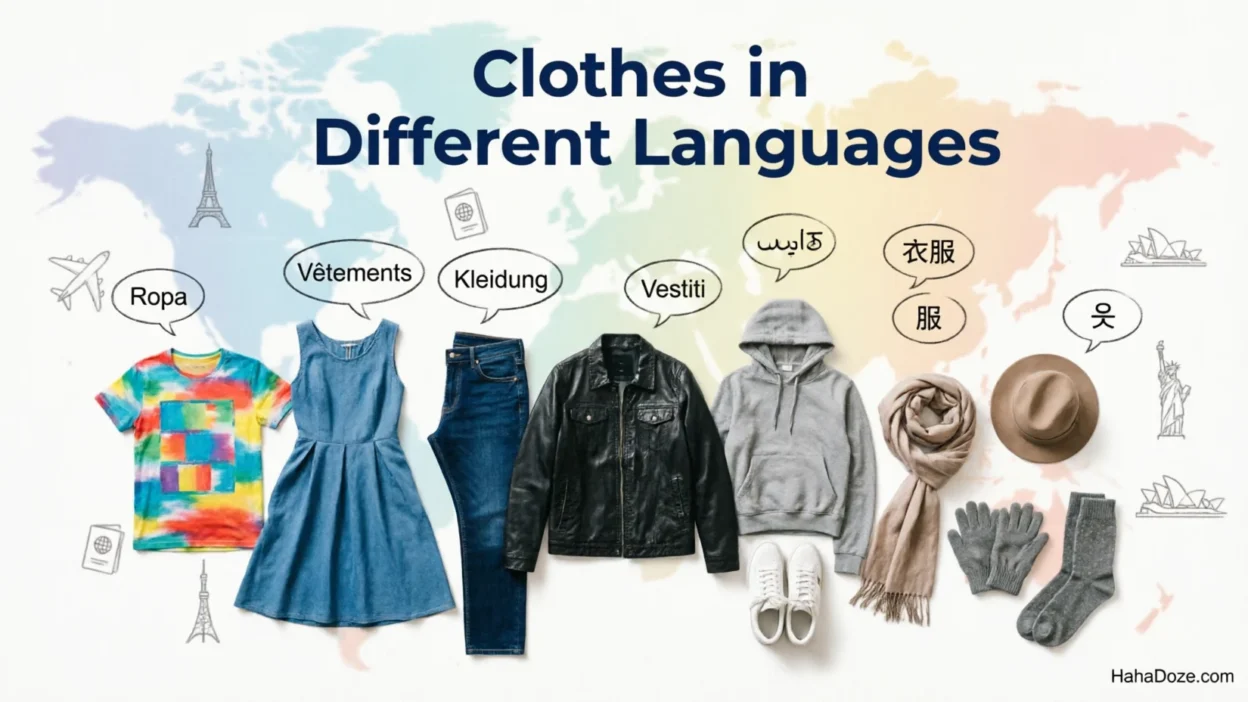
The word for clothes varies by language, such as ropa in Spanish, vêtements in French, 衣服 in Chinese, and 服 in Japanese.
2. Why should I learn clothes translations?
Learning clothes translations helps during travel, shopping, language learning, and conversations with native speakers.
3. What is the most common translation of clothes?
Each language has its own unique translation, but every word refers to garments or clothing worn by people.
4. Can I use these clothes translations while traveling?
Yes. These translations are useful for shopping, asking questions, reading signs, and communicating in different countries.
5. Where can I learn more words in different languages?
You can continue learning everyday vocabulary such as food, greetings, colors, animals, numbers, and clothing terms to improve your language skills.

Evelyn Grace is a language enthusiast and content writer at LingoMean, where she explains the meaning of words, phrases, and expressions. She creates clear, practical, and engaging content that helps readers confidently understand what to say in everyday conversations.