
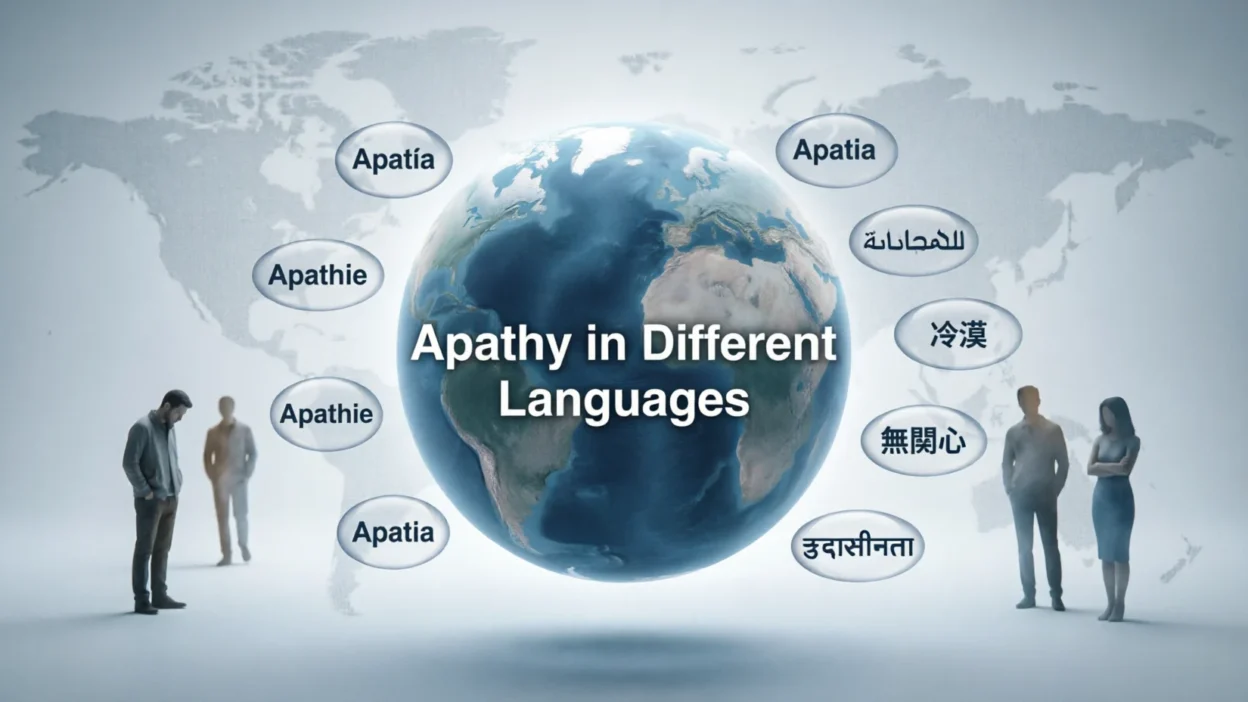
Apathy is a word used to describe a lack of interest, enthusiasm, concern, or emotional response. It is commonly used when someone seems indifferent toward something that would normally matter to them.
Learning how to say apathy in different languages can be useful for language learners, writers, translators, students, and anyone interested in how emotions are expressed around the world.
The word may have slightly different shades of meaning depending on the language and context. Some languages use a direct equivalent of “apathy,” while others commonly use words closer to “indifference,” “lack of interest,” or “emotional detachment.”
Below, you will find apathy translations in 70 languages, including the correct native phrase, an easy English pronunciation, and a simple real-life example. This guide makes it easy to discover how to say apathy in different languages and understand how the term is used naturally.
Apathy in Different Languages
The following table provides apathy in all languages with simple pronunciation guides and practical examples.
| # | Language | Native Phrase | Easy English Pronunciation | Real-Life Example Sentence | English Meaning |
|---|---|---|---|---|---|
| 1 | English | Apathy | AP-uh-thee | His apathy toward the project was obvious. | He showed no interest in the project. |
| 2 | Spanish | Apatía | ah-pah-TEE-ah | Su apatía hacia el trabajo era evidente. | His apathy toward the work was obvious. |
| 3 | French | Apathie | ah-pah-TEE | Son apathie était évidente. | His apathy was obvious. |
| 4 | German | Apathie | ah-pah-TEE | Seine Apathie war deutlich. | His apathy was clear. |
| 5 | Italian | Apatia | ah-pah-TEE-ah | La sua apatia era evidente. | His apathy was obvious. |
| 6 | Portuguese | Apatia | ah-pah-TEE-ah | A apatia dele era evidente. | His apathy was obvious. |
| 7 | Dutch | Apathie | ah-pah-TEE | Zijn apathie was duidelijk. | His apathy was clear. |
| 8 | Afrikaans | Apatie | ah-pah-TEE | Sy apatie was duidelik. | His apathy was clear. |
| 9 | Swedish | Apati | ah-pah-TEE | Hans apati var tydlig. | His apathy was obvious. |
| 10 | Danish | Apati | ah-pah-TEE | Hans apati var tydelig. | His apathy was obvious. |
| 11 | Norwegian | Apati | ah-pah-TEE | Hans apati var tydelig. | His apathy was obvious. |
| 12 | Finnish | Apatia | ah-pah-tee-ah | Hänen apatiansa oli ilmeistä. | His apathy was obvious. |
| 13 | Icelandic | Sinnuleysi | SIN-noo-lay-see | Sinnuleysi hans kom öllum á óvart. | His apathy surprised everyone. |
| 14 | Estonian | Apaatia | ah-pah-TEE-ah | Tema apaatia oli ilmne. | His apathy was obvious. |
| 15 | Latvian | Apātija | ah-PAH-tee-yah | Viņa apātija bija acīmredzama. | His apathy was obvious. |
| 16 | Lithuanian | Apatija | ah-pah-TEE-yah | Jo apatija buvo akivaizdi. | His apathy was obvious. |
| 17 | Polish | Apatia | ah-PAH-tyah | Jego apatia była widoczna. | His apathy was visible. |
| 18 | Czech | Apatie | ah-PAH-tyeh | Jeho apatie byla zřejmá. | His apathy was obvious. |
| 19 | Slovak | Apatia | ah-PAH-tyah | Jeho apatia bola zjavná. | His apathy was obvious. |
| 20 | Slovenian | Apatija | ah-pah-TEE-yah | Njegova apatija je bila očitna. | His apathy was obvious. |
| 21 | Croatian | Apatija | ah-pah-TEE-yah | Njegova apatija bila je očita. | His apathy was obvious. |
| 22 | Serbian | Apatija / Апатија | ah-pah-TEE-yah | Njegova apatija je bila očigledna. | His apathy was obvious. |
| 23 | Bosnian | Apatija | ah-pah-TEE-yah | Njegova apatija bila je očigledna. | His apathy was obvious. |
| 24 | Macedonian | Апатија | ah-pah-TEE-yah | Неговата апатија беше очигледна. | His apathy was obvious. |
| 25 | Bulgarian | Апатия | ah-PAH-tee-yah | Неговата апатия беше очевидна. | His apathy was obvious. |
| 26 | Russian | Апатия | ah-PAH-tee-yah | Его апатия была очевидна. | His apathy was obvious. |
| 27 | Ukrainian | Апатія | ah-pah-TEE-yah | Його апатія була очевидною. | His apathy was obvious. |
| 28 | Belarusian | Апатыя | ah-pah-TAH-yah | Яго апатыя была відавочнай. | His apathy was obvious. |
| 29 | Greek | Απάθεια | ah-PAH-thee-ah | Η απάθειά του ήταν εμφανής. | His apathy was obvious. |
| 30 | Romanian | Apatie | ah-pah-TEE-eh | Apatia lui era evidentă. | His apathy was obvious. |
| 31 | Hungarian | Apátia | ah-PAH-tee-ah | Az apátiája nyilvánvaló volt. | His apathy was obvious. |
| 32 | Albanian | Apati | ah-pah-TEE | Apatia e tij ishte e dukshme. | His apathy was obvious. |
| 33 | Turkish | Kayıtsızlık | kuh-YUHT-suhz-luhk | Onun kayıtsızlığı dikkat çekiciydi. | His indifference was noticeable. |
| 34 | Azerbaijani | Apatiya | ah-pah-tee-YAH | Onun apatiyası aydın idi. | His apathy was clear. |
| 35 | Armenian | Ապատիա | ah-pah-TEE-ah | Նրա ապատիան ակնհայտ էր։ | His apathy was obvious. |
| 36 | Georgian | აპათია | ah-pah-TEE-ah | მისი აპათია აშკარა იყო. | His apathy was obvious. |
| 37 | Persian | بیتفاوتی | bee-ta-FAW-tee | بیتفاوتی او آشکار بود. | His indifference was obvious. |
| 38 | Arabic | لامبالاة | lah-muh-baa-LAAT | كانت لامبالاته واضحة. | His apathy was obvious. |
| 39 | Hebrew | אדישות | ah-dee-SHOOT | האדישות שלו הייתה ברורה. | His apathy was obvious. |
| 40 | Hindi | उदासीनता | oo-dah-SEE-nuh-tah | उसकी उदासीनता साफ़ थी। | His apathy was obvious. |
| 41 | Urdu | بے حسی | bay-HIS-see | اس کی بے حسی واضح تھی۔ | His apathy was obvious. |
| 42 | Bengali | উদাসীনতা | oo-dah-SHEE-noh-tah | তার উদাসীনতা স্পষ্ট ছিল। | His apathy was obvious. |
| 43 | Punjabi | ਉਦਾਸੀਨਤਾ | oo-daa-SEE-nuh-taa | ਉਸਦੀ ਉਦਾਸੀਨਤਾ ਸਪੱਸ਼ਟ ਸੀ। | His apathy was obvious. |
| 44 | Gujarati | ઉદાસીનતા | oo-daa-SEE-nuh-taa | તેની ઉદાસીનતા સ્પષ્ટ હતી. | His apathy was obvious. |
| 45 | Marathi | उदासीनता | oo-daa-SEE-nuh-taa | त्याची उदासीनता स्पष्ट होती. | His apathy was obvious. |
| 46 | Nepali | उदासीनता | oo-daa-SEE-nuh-taa | उसको उदासीनता स्पष्ट थियो। | His apathy was obvious. |
| 47 | Sinhala | උදාසීනත්වය | oo-daa-SEE-naht-vah-yah | ඔහුගේ උදාසීනත්වය පැහැදිලි විය. | His apathy was obvious. |
| 48 | Tamil | அக்கறையின்மை | uh-kah-RY-yeen-my | அவனுடைய அக்கறையின்மை தெளிவாக இருந்தது. | His lack of concern was obvious. |
| 49 | Telugu | ఉదాసీనత | oo-daa-SEE-na-ta | అతని ఉదాసీనత స్పష్టంగా కనిపించింది. | His apathy was obvious. |
| 50 | Kannada | ನಿರಾಸಕ್ತಿ | nee-RAA-sak-tee | ಅವನ ನಿರಾಸಕ್ತಿ ಸ್ಪಷ್ಟವಾಗಿತ್ತು. | His lack of interest was obvious. |
| 51 | Malayalam | നിസ്സംഗത | nis-SANG-ga-ta | അവന്റെ നിസ്സംഗത വ്യക്തമായിരുന്നു. | His apathy was obvious. |
| 52 | Odia | ଉଦାସୀନତା | oo-daa-SEE-na-ta | ତାଙ୍କର ଉଦାସୀନତା ସ୍ପଷ୍ଟ ଥିଲା। | His apathy was obvious. |
| 53 | Assamese | উদাসীনতা | oo-daa-SEE-noh-ta | তেওঁৰ উদাসীনতা স্পষ্ট আছিল। | His apathy was obvious. |
| 54 | Chinese (Mandarin) | 冷漠 | leng-MOH | 他的冷漠很明显。 | His apathy was obvious. |
| 55 | Japanese | 無関心 | moo-KAN-shin | 彼の無関心は明らかだった。 | His apathy was obvious. |
| 56 | Korean | 무관심 | moo-gwan-SHIM | 그의 무관심은 분명했다. | His apathy was obvious. |
| 57 | Vietnamese | Sự thờ ơ | soo tuh UH | Sự thờ ơ của anh ấy rất rõ ràng. | His apathy was very obvious. |
| 58 | Thai | ความเฉยเมย | khwaam choey-MOEY | ความเฉยเมยของเขาเห็นได้ชัด | His apathy was obvious. |
| 59 | Indonesian | Apati | ah-PAH-tee | Sikap apatinya terlihat jelas. | His apathetic attitude was obvious. |
| 60 | Malay | Apati | ah-PAH-tee | Sikap apatinya sangat ketara. | His apathetic attitude was obvious. |
| 61 | Filipino | Kawalang-interes | ka-wa-LANG in-teh-RES | Kitang-kita ang kanyang kawalang-interes. | His lack of interest was obvious. |
| 62 | Swahili | Kutojali | koo-toh-JAH-lee | Kutojali kwake kulionekana wazi. | His apathy was clearly visible. |
| 63 | Zulu | Ukunganaki | oo-koon-gah-NAH-kee | Ukunganaki kwakhe kwakusobala. | His apathy was obvious. |
| 64 | Xhosa | Ukungakhathali | oo-koon-gah-kah-TAH-lee | Ukungakhathali kwakhe kwakucacile. | His apathy was clear. |
| 65 | Yoruba | Àìnífẹ̀ẹ́ | ah-ee-nee-FEH-eh | Àìnífẹ̀ẹ́ rẹ̀ hàn gbangba. | His lack of interest was obvious. |
| 66 | Hausa | Rashin ko-in-kula | rah-SHEEN koh-in-KOO-lah | Rashin ko-in-kulansa ya bayyana. | His apathy was obvious. |
| 67 | Amharic | ግዴለሽነት | gee-deh-LESH-net | ግዴለሽነቱ ግልጽ ነበር። | His apathy was obvious. |
| 68 | Somali | Dan-la’aan | dan-LAA-an | Dan-la’aantiisu way muuqatay. | His apathy was obvious. |
| 69 | Malagasy | Tsy firaharahana | chee fee-rah-ha-RAH-nah | Hita ny tsy firaharahana azy. | His apathy was visible. |
| 70 | Haitian Creole | Apati | ah-pah-TEE | Apati li te parèt klè. | His apathy was clearly visible. |
What Does Apathy Mean?
Apathy means a lack of interest, concern, enthusiasm, or emotional involvement. An apathetic person may not feel motivated to react, participate, or care about a particular situation.
For example, if someone receives important news but shows almost no reaction, you might describe their response as apathy.
Apathy is different from simply being tired or quiet. The word generally focuses on a reduced level of interest, motivation, or emotional response.
How to Say Apathy in Different Languages
The translations above show that there is not always a single perfect word-for-word equivalent. Many European languages use forms closely related to the English word “apathy,” such as apatía, apathie, apatia, and apatia.
In other languages, the most natural expression can be closer to indifference, lack of interest, or lack of concern. This is why context matters when looking for accurate apathy translations.
If you are learning a language, it is useful to remember both the direct translation and the way native speakers normally express the idea.
Apathy Around the World
The concept of apathy appears in everyday conversations across many cultures. People may use it when talking about work, education, relationships, politics, social situations, or personal motivation.
However, cultural context can influence which word sounds most natural. A direct dictionary translation may communicate the basic meaning, while a related word such as “indifference” or “lack of concern” may be more natural in an everyday sentence.
Understanding these differences can help you use apathy in different languages more accurately.
Apathy vs. Indifference
Apathy and indifference are closely related, but they are not always identical.
Apathy usually suggests a broader lack of interest, motivation, enthusiasm, or emotional response. Indifference often emphasizes that someone does not particularly care about a specific person, issue, or outcome.
For example, someone can be indifferent about which restaurant they visit, while prolonged apathy may describe a more general lack of motivation or emotional involvement.
Common Uses of the Word Apathy
The word apathy can appear in many everyday contexts, including:
- Apathy toward work
- Apathy toward school
- Political apathy
- Social apathy
- Public apathy
- Emotional apathy
- Apathy toward a particular issue
- Apathy among young people
- Apathy caused by disappointment
These expressions can help you understand how the word is commonly used in English before comparing it with translations in other languages.
Why Learn Apathy in Different Languages?
Learning emotional vocabulary across languages can improve communication and cultural understanding. The word “apathy” may appear in books, news reports, academic writing, conversations, and translated content.
Knowing how to say apathy in different languages can also help travelers, students, translators, writers, and multilingual speakers choose the right expression for a particular situation.
The 70-language list above provides a quick reference for comparing apathy in all languages and seeing how the concept is expressed around the world.
Conclusion
Apathy describes a lack of interest, concern, motivation, enthusiasm, or emotional response. Although many languages have a direct equivalent, others use words associated with indifference or lack of interest. This makes context especially important when translating the word.
This guide has covered apathy in different languages across 70 languages, along with native phrases, simple pronunciations, and real-life examples. If you are studying languages, writing, translating, or simply curious about apathy around the world, these translations provide a useful starting point for understanding how this idea is expressed across different cultures.
FAQs:
1. What is apathy in simple words?
Apathy means having little or no interest, concern, motivation, or emotional response toward something.
2. How do you say apathy in Spanish?
Apathy in Spanish is apatía, pronounced approximately ah-pah-TEE-ah.
3. How do you say apathy in French?
Apathy in French is apathie, pronounced approximately ah-pah-TEE.
4. Is apathy the same as indifference?
Apathy and indifference have similar meanings, but apathy often refers more broadly to a lack of motivation, interest, or emotional response, while indifference can focus on not caring about a particular matter.
5. What is apathy in Urdu?
A common Urdu translation for apathy is بے حسی (be-hissi), which can convey emotional insensitivity, lack of feeling, or apathy depending on context.

Carter Connor is a language enthusiast and content writer at LingoMean, helping readers discover what to say in everyday conversations with clear explanations, practical examples, and easy-to-understand communication tips.