The word “okay” is one of the most useful expressions in everyday communication. It can show agreement, acceptance, understanding, confirmation, or simply that everything is fine.
Because it is so common, knowing how to say okay in different languages can make conversations easier and more natural when traveling, studying languages, or communicating with people from other cultures.
In this guide, you will discover okay in all languages through 70 widely spoken languages. Each entry includes the native phrase, an easy English pronunciation, and a short real-life example with its English meaning.
This makes the list useful for anyone searching for how to say okay in different languages, learning common okay translations, or exploring how people say “okay” around the world.
Some languages use a direct equivalent of “okay,” while others commonly use words meaning “alright,” “fine,” “agreed,” or “yes” depending on the situation.
Okay in Different Languages: 70 Translations
| # | Language | Native Phrase | English Pronunciation | Example Sentence | English Meaning |
|---|---|---|---|---|---|
| 1 | English | Okay | oh-KAY | Okay, I understand. | Okay, I understand. |
| 2 | Spanish | Vale | VAH-leh | Vale, nos vemos mañana. | Okay, see you tomorrow. |
| 3 | French | D’accord | dah-KOR | D’accord, je viens avec toi. | Okay, I’ll come with you. |
| 4 | German | Okay / In Ordnung | oh-KAY / in OR-doong | Okay, ich komme. | Okay, I’m coming. |
| 5 | Italian | Va bene | vah BEH-neh | Va bene, facciamolo. | Okay, let’s do it. |
| 6 | Portuguese | Tudo bem | TOO-doo baym | Tudo bem, eu vou. | Okay, I’ll go. |
| 7 | Dutch | Oké | oh-KAY | Oké, tot morgen. | Okay, see you tomorrow. |
| 8 | Swedish | Okej | oh-KAY | Okej, jag förstår. | Okay, I understand. |
| 9 | Danish | Okay | oh-KAY | Okay, jeg kommer. | Okay, I’m coming. |
| 10 | Norwegian | Greit | grite | Greit, vi gjør det. | Okay, we’ll do it. |
| 11 | Finnish | Okei | OH-kay | Okei, ymmärrän. | Okay, I understand. |
| 12 | Icelandic | Allt í lagi | alt ee LAH-yee | Allt í lagi, ég kem. | Okay, I’m coming. |
| 13 | Irish | Ceart go leor | kyart guh lyor | Ceart go leor, ég geri það. | Okay, I’ll do it. |
| 14 | Welsh | Iawn | yow-n | Iawn, fe wnawn ni. | Okay, we’ll do it. |
| 15 | Polish | Dobrze | DOH-bzheh | Dobrze, rozumiem. | Okay, I understand. |
| 16 | Czech | Dobře | DOH-bzheh | Dobře, přijdu. | Okay, I’ll come. |
| 17 | Slovak | Dobre | DOH-breh | Dobre, rozumiem. | Okay, I understand. |
| 18 | Slovenian | V redu | veh REH-doo | V redu, razumem. | Okay, I understand. |
| 19 | Croatian | U redu | oo REH-doo | U redu, dolazim. | Okay, I’m coming. |
| 20 | Serbian | U redu | oo REH-doo | U redu, razumem. | Okay, I understand. |
| 21 | Bosnian | U redu | oo REH-doo | U redu, vidimo se sutra. | Okay, see you tomorrow. |
| 22 | Bulgarian | Добре | doh-BREH | Добре, разбирам. | Okay, I understand. |
| 23 | Macedonian | Добро | DOH-broh | Добро, ќе дојдам. | Okay, I’ll come. |
| 24 | Russian | Хорошо | khah-rah-SHOH | Хорошо, я понял. | Okay, I understand. |
| 25 | Ukrainian | Добре | DOH-breh | Добре, я прийду. | Okay, I’ll come. |
| 26 | Belarusian | Добра | DOH-brah | Добра, я згодны. | Okay, I agree. |
| 27 | Lithuanian | Gerai | geh-RYE | Gerai, aš suprantu. | Okay, I understand. |
| 28 | Latvian | Labi | LAH-bee | Labi, es nākšu. | Okay, I’ll come. |
| 29 | Estonian | Okei | OH-kay | Okei, ma saan aru. | Okay, I understand. |
| 30 | Hungarian | Rendben | REND-ben | Rendben, megértettem. | Okay, I understand. |
| 31 | Romanian | Bine | BEE-neh | Bine, vin și eu. | Okay, I’m coming too. |
| 32 | Greek | Εντάξει | en-DAK-see | Εντάξει, θα έρθω. | Okay, I’ll come. |
| 33 | Albanian | Në rregull | nuh REH-gool | Në rregull, vij. | Okay, I’m coming. |
| 34 | Turkish | Tamam | tah-MAHM | Tamam, anladım. | Okay, I understand. |
| 35 | Azerbaijani | Oldu | OL-doo | Oldu, başa düşdüm. | Okay, I understand. |
| 36 | Armenian | Լավ | lav | Լավ, հասկացա։ | Okay, I understand. |
| 37 | Georgian | კარგი | KAR-ghee | კარგი, გავიგე. | Okay, I understand. |
| 38 | Persian | باشه | BAA-sheh | باشه، فهمیدم. | Okay, I understand. |
| 39 | Arabic | حسنًا | HA-sa-nan | حسنًا، فهمت. | Okay, I understand. |
| 40 | Hebrew | בסדר | beh-SEH-der | בסדר, אני מבין. | Okay, I understand. |
| 41 | Hindi | ठीक है | theek hai | ठीक है, मैं आऊँगा। | Okay, I’ll come. |
| 42 | Urdu | ٹھیک ہے | theek hai | ٹھیک ہے، میں آتا ہوں۔ | Okay, I’m coming. |
| 43 | Bengali | ঠিক আছে | theek ach-he | ঠিক আছে, আমি যাব। | Okay, I’ll go. |
| 44 | Punjabi | ਠੀਕ ਹੈ | theek hai | ਠੀਕ ਹੈ, ਮੈਂ ਆਵਾਂਗਾ। | Okay, I’ll come. |
| 45 | Gujarati | ઠીક છે | theek chhe | ઠીક છે, હું આવીશ. | Okay, I’ll come. |
| 46 | Marathi | ठीक आहे | theek aa-he | ठीक आहे, मी येतो. | Okay, I’m coming. |
| 47 | Nepali | ठीक छ | theek chha | ठीक छ, म आउँछु। | Okay, I’ll come. |
| 48 | Sinhala | හරි | ha-ree | හරි, මම එන්නම්. | Okay, I’ll come. |
| 49 | Tamil | சரி | sah-ree | சரி, நான் வருகிறேன். | Okay, I’m coming. |
| 50 | Telugu | సరే | sah-ray | సరే, నేను వస్తాను. | Okay, I’ll come. |
| 51 | Kannada | ಸರಿ | sah-ree | ಸರಿ, ನಾನು ಬರುತ್ತೇನೆ. | Okay, I’ll come. |
| 52 | Malayalam | ശരി | shah-ree | ശരി, ഞാൻ വരാം. | Okay, I’ll come. |
| 53 | Odia | ଠିକ ଅଛି | theek ach-hi | ଠିକ ଅଛି, ମୁଁ ଆସିବି। | Okay, I’ll come. |
| 54 | Assamese | ঠিক আছে | theek aa-se | ঠিক আছে, মই যাম। | Okay, I’ll go. |
| 55 | Chinese (Mandarin) | 好的 | hǎo de | 好的,我明白了。 | Okay, I understand. |
| 56 | Cantonese | 好啊 | hou aa | 好啊,我知道了。 | Okay, I understand. |
| 57 | Japanese | いいよ | ee-yoh | いいよ、行こう。 | Okay, let’s go. |
| 58 | Korean | 괜찮아요 | gwaen-chan-ah-yo | 괜찮아요, 이해했어요. | Okay, I understand. |
| 59 | Vietnamese | Được | dook | Được, tôi hiểu rồi. | Okay, I understand. |
| 60 | Thai | ได้ | dai | ได้ ฉันเข้าใจแล้ว | Okay, I understand. |
| 61 | Indonesian | Oke | oh-KAY | Oke, saya mengerti. | Okay, I understand. |
| 62 | Malay | Okey | oh-KAY | Okey, saya faham. | Okay, I understand. |
| 63 | Filipino | Sige | SEE-geh | Sige, pupunta ako. | Okay, I’ll go. |
| 64 | Burmese | အိုကေ | oh-KAY | အိုကေ၊ နားလည်ပြီ။ | Okay, I understand. |
| 65 | Khmer | យល់ព្រម | yol-prom | យល់ព្រម ខ្ញុំនឹងទៅ។ | Okay, I’ll go. |
| 66 | Lao | ໂອເຄ | oh-KAY | ໂອເຄ, ຂ້ອຍເຂົ້າໃຈ. | Okay, I understand. |
| 67 | Swahili | Sawa | SAH-wah | Sawa, nimeelewa. | Okay, I understand. |
| 68 | Zulu | Kulungile | koo-loon-GEE-leh | Kulungile, ngiyeza. | Okay, I’m coming. |
| 69 | Afrikaans | Goed | khoot | Goed, ek verstaan. | Okay, I understand. |
| 70 | Haitian Creole | Dako | dah-KOH | Dako, mwen konprann. | Okay, I understand. |
How to Say Okay in Different Languages
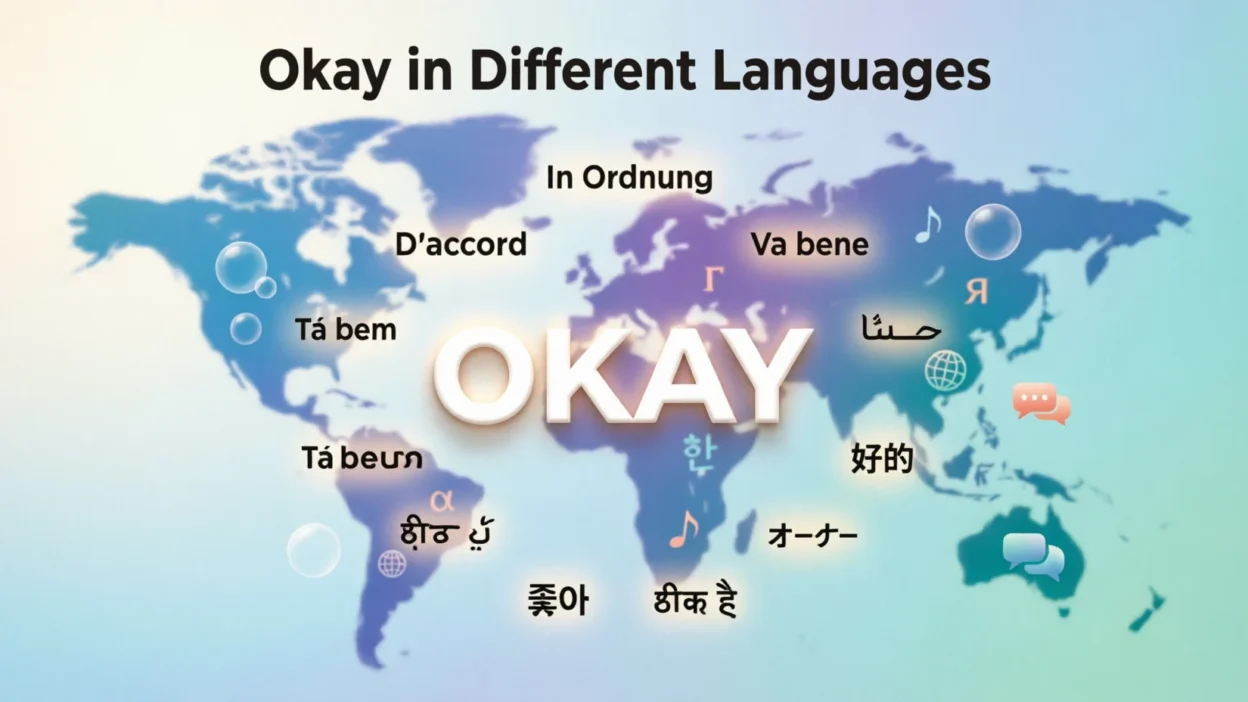
The easiest way to learn how to say okay in different languages is to focus on the expressions people actually use in everyday conversation. In some languages, the direct word “okay” is common and understood easily. In others, a native expression meaning “fine,” “good,” “all right,” or “agreed” sounds more natural.
For example, Spanish speakers commonly use vale, while Italian speakers often say va bene. In Turkish, tamam is extremely common, and in Hindi and Urdu, theek hai is a natural way to express “okay” or “alright.”
Okay Translations in Everyday Conversation
The meaning of “okay” changes slightly according to context. It can be used to accept a suggestion, confirm information, show understanding, or reassure someone.
For example:
- Agreement: “Okay, I’ll do it.”
- Understanding: “Okay, I understand.”
- Acceptance: “Okay, that works.”
- Reassurance: “It’s okay.”
- Confirmation: “Okay, see you tomorrow.”
This is why okay translations should be learned with examples rather than as isolated vocabulary.
Okay Around the World
The word “okay” has become widely recognized internationally, but local languages still have their own natural equivalents. In Europe, expressions such as vale, d’accord, va bene, dobre, and gut or in Ordnung are commonly encountered.
Across South Asia, expressions such as theek hai, ঠিক আছে, ਠੀਕ ਹੈ, and similar forms are frequently used in everyday speech. In East and Southeast Asia, languages such as Japanese, Korean, Chinese, Vietnamese, Thai, and Indonesian have their own familiar expressions for agreement and understanding.
Learning these expressions can help you sound more natural when speaking with native speakers.
Is “Okay” the Same in Every Language?
No. There is not always one exact translation of “okay.” The best expression depends on what you mean.
If you mean “I agree,” a language may use an expression equivalent to “agreed.” If you mean “I understand,” speakers may use a phrase meaning “I understand.” If you mean “everything is fine,” another expression may be more appropriate.
Therefore, the phrases in this list represent common conversational ways to communicate the idea of “okay,” rather than claiming that every language has one exact word with every meaning of the English word.
Why Learn Okay in Different Languages?
Learning a simple word such as “okay” can be surprisingly useful. It is short, common, and easy to practice in real conversations.
Travelers can use these expressions to communicate basic agreement. Language learners can use them to build confidence with everyday vocabulary. Students can also use this list to compare how different languages express acceptance, understanding, and agreement.
Knowing okay in all languages is also a fun way to explore similarities and differences between cultures and languages.
Conclusion
Learning how to say okay in different languages gives you a simple but practical way to connect with people around the world. From Spanish vale and Italian va bene to Turkish tamam, Hindi ठीक है, Japanese いいよ, and Swahili sawa, each language has its own natural way to express agreement, understanding, or acceptance.
Keep this list handy when traveling, studying a new language, or communicating internationally. Even one familiar word can make a conversation feel more comfortable and welcoming.
FAQs:
1. What is “okay” in Spanish?
“Okay” is commonly expressed as vale in Spanish. It can mean “okay,” “alright,” or “agreed,” depending on the context.
2. How do you say “okay” in French?
In French, d’accord is a common way to say “okay” or “agreed.” The expression is widely used in everyday conversations.
3. What is “okay” in Hindi and Urdu?
In both Hindi and Urdu, theek hai is a very common expression for “okay,” “alright,” or “that’s fine.”
4. How do you say “okay” in Japanese?
A common casual expression is いいよ (ii yo), which can mean “okay,” “sure,” or “that’s fine.” The appropriate expression can vary depending on the situation.
5. What is the most common translation of “okay” around the world?
There is no single translation used in every language. Many languages have adopted “okay” itself, while others commonly use native expressions meaning “fine,” “alright,” “good,” “agreed,” or “I understand.”

Evelyn Grace is a language enthusiast and content writer at LingoMean, where she explains the meaning of words, phrases, and expressions. She creates clear, practical, and engaging content that helps readers confidently understand what to say in everyday conversations.