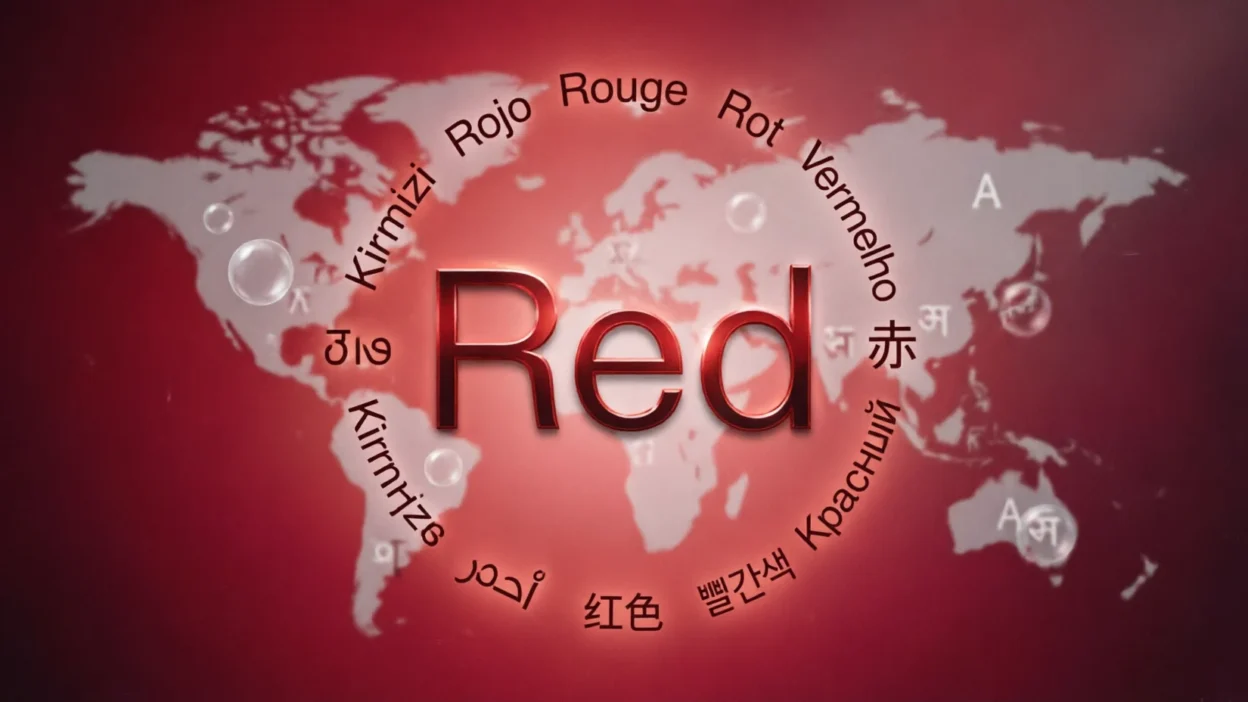
Red is one of the most recognized colors in the world. It symbolizes love, passion, energy, danger, celebration, and courage across different cultures.
Learning how to say red in different languages is useful for travelers, language learners, students, and anyone interested in world cultures.
If you’re expanding your vocabulary or simply curious about red in all languages, this guide provides accurate translations, easy pronunciations, and practical examples.You’ll also discover how people use the word in everyday conversations around the world.
Red in Different Languages Table
| # | Language | Translation | Pronunciation | Example Sentence | English Meaning |
|---|---|---|---|---|---|
| 1 | English | Red | red | The apple is red. | The apple is red. |
| 2 | Spanish | Rojo | RO-ho | La manzana es roja. | The apple is red. |
| 3 | French | Rouge | roozh | La pomme est rouge. | The apple is red. |
| 4 | German | Rot | roht | Der Apfel ist rot. | The apple is red. |
| 5 | Italian | Rosso | ROS-so | La mela è rossa. | The apple is red. |
| 6 | Portuguese | Vermelho | ver-MEL-yoo | A maçã é vermelha. | The apple is red. |
| 7 | Dutch | Rood | roht | De appel is rood. | The apple is red. |
| 8 | Russian | Красный | KRAS-nee | Яблоко красное. | The apple is red. |
| 9 | Ukrainian | Червоний | cher-VO-nee | Яблуко червоне. | The apple is red. |
| 10 | Polish | Czerwony | cher-VO-nih | Jabłko jest czerwone. | The apple is red. |
| 11 | Czech | Červený | CHER-veh-nee | Jablko je červené. | The apple is red. |
| 12 | Slovak | Červený | CHER-veh-nee | Jablko je červené. | The apple is red. |
| 13 | Slovenian | Rdeč | r-DECH | Jabolko je rdeče. | The apple is red. |
| 14 | Croatian | Crven | TSR-ven | Jabuka je crvena. | The apple is red. |
| 15 | Serbian | Црвен | TSR-ven | Јабука је црвена. | The apple is red. |
| 16 | Bosnian | Crven | TSR-ven | Jabuka je crvena. | The apple is red. |
| 17 | Bulgarian | Червен | CHER-ven | Ябълката е червена. | The apple is red. |
| 18 | Romanian | Roșu | RO-shoo | Mărul este roșu. | The apple is red. |
| 19 | Greek | Κόκκινο | KO-kee-no | Το μήλο είναι κόκκινο. | The apple is red. |
| 20 | Turkish | Kırmızı | kur-muh-ZUH | Elma kırmızıdır. | The apple is red. |
| 21 | Arabic | أحمر | AH-mar | التفاحة حمراء. | The apple is red. |
| 22 | Hebrew | אדום | ah-DOM | התפוח אדום. | The apple is red. |
| 23 | Persian | قرمز | gher-MEZ | سیب قرمز است. | The apple is red. |
| 24 | Urdu | سرخ | surkh | سیب سرخ ہے۔ | The apple is red. |
| 25 | Hindi | लाल | laal | सेब लाल है। | The apple is red. |
| 26 | Punjabi | ਲਾਲ | laal | ਸੇਬ ਲਾਲ ਹੈ। | The apple is red. |
| 27 | Bengali | লাল | laal | আপেল লাল। | The apple is red. |
| 28 | Gujarati | લાલ | laal | સફરજન લાલ છે. | The apple is red. |
| 29 | Marathi | लाल | laal | सफरचंद लाल आहे. | The apple is red. |
| 30 | Tamil | சிவப்பு | si-VAP-poo | ஆப்பிள் சிவப்பாக உள்ளது. | The apple is red. |
| 31 | Telugu | ఎరుపు | eh-roo-poo | ఆపిల్ ఎరుపుగా ఉంది. | The apple is red. |
| 32 | Kannada | ಕೆಂಪು | KEM-poo | ಸೇಬು ಕೆಂಪಾಗಿದೆ. | The apple is red. |
| 33 | Malayalam | ചുവപ്പ് | choo-VAP-poo | ആപ്പിൾ ചുവപ്പാണ്. | The apple is red. |
| 34 | Sinhala | රතු | ra-thu | ඇපල් රතුයි. | The apple is red. |
| 35 | Nepali | रातो | RAA-to | स्याउ रातो छ। | The apple is red. |
| 36 | Chinese (Mandarin) | 红色 | hong suh | 苹果是红色的。 | The apple is red. |
| 37 | Japanese | 赤 | ah-kah | りんごは赤いです。 | The apple is red. |
| 38 | Korean | 빨간색 | ppal-gan-sek | 사과는 빨간색입니다. | The apple is red. |
| 39 | Vietnamese | Đỏ | daw | Quả táo màu đỏ. | The apple is red. |
| 40 | Thai | สีแดง | see-daeng | แอปเปิลสีแดง | The apple is red. |
| 41 | Indonesian | Merah | meh-RAH | Apel itu merah. | The apple is red. |
| 42 | Malay | Merah | meh-RAH | Epal itu merah. | The apple is red. |
| 43 | Filipino | Pula | poo-LAH | Ang mansanas ay pula. | The apple is red. |
| 44 | Swahili | Nyekundu | nyeh-KOON-doo | Tufaha ni nyekundu. | The apple is red. |
| 45 | Zulu | Bomvu | bom-voo | I-apula libomvu. | The apple is red. |
| 46 | Xhosa | Bomvu | bom-voo | I-apile libomvu. | The apple is red. |
| 47 | Afrikaans | Rooi | ROY | Die appel is rooi. | The apple is red. |
| 48 | Amharic | ቀይ | kay | ፖም ቀይ ነው። | The apple is red. |
| 49 | Somali | Cas | kaas | Tufaaxu waa cas. | The apple is red. |
| 50 | Yoruba | Pupa | POO-pah | Àpù náà pupa. | The apple is red. |
| 51 | Igbo | Uhie | oo-HEE-eh | Apụl ahụ dị uhie. | The apple is red. |
| 52 | Hausa | Ja | jah | Tuffa ja ce. | The apple is red. |
| 53 | Finnish | Punainen | poo-nai-nen | Omena on punainen. | The apple is red. |
| 54 | Swedish | Röd | rurd | Äpplet är rött. | The apple is red. |
| 55 | Norwegian | Rød | rurd | Eplet er rødt. | The apple is red. |
| 56 | Danish | Rød | rurd | Æblet er rødt. | The apple is red. |
| 57 | Icelandic | Rauður | ROY-thur | Eplið er rautt. | The apple is red. |
| 58 | Irish | Dearg | JAR-ag | Tá an t-úll dearg. | The apple is red. |
| 59 | Welsh | Coch | kokh | Mae’r afal yn goch. | The apple is red. |
| 60 | Scottish Gaelic | Dearg | JAR-ak | Tha an t-ubhal dearg. | The apple is red. |
| 61 | Estonian | Punane | poo-na-ne | Õun on punane. | The apple is red. |
| 62 | Latvian | Sarkans | SAR-kans | Ābols ir sarkans. | The apple is red. |
| 63 | Lithuanian | Raudonas | row-DO-nas | Obuolys yra raudonas. | The apple is red. |
| 64 | Albanian | I kuq | ee kooch | Molla është e kuqe. | The apple is red. |
| 65 | Hungarian | Piros | PEE-rosh | Az alma piros. | The apple is red. |
| 66 | Georgian | წითელი | tsi-TE-li | ვაშლი წითელია. | The apple is red. |
| 67 | Armenian | Կարմիր | kar-MEER | Խնձորը կարմիր է։ | The apple is red. |
| 68 | Azerbaijani | Qırmızı | gur-muh-ZUH | Alma qırmızıdır. | The apple is red. |
| 69 | Kazakh | Қызыл | kuh-ZUHL | Алма қызыл. | The apple is red. |
| 70 | Mongolian | Улаан | oo-LAHN | Алим улаан. | The apple is red. |
How to Say Red in Different Languages
The word red changes from language to language, but it usually represents similar ideas such as love, warmth, strength, celebration, warning, and power. Knowing these translations can make communication easier when traveling or learning new languages.
Why Learn Red Translations Around the World?
Learning red translations helps you:
- Improve your multilingual vocabulary.
- Understand signs and labels while traveling.
- Communicate basic colors in different countries.
- Learn cultural meanings associated with colors.
- Build confidence when studying foreign languages.
Cultural Meaning of Red Around the World
Although red is a universal color, its symbolism varies by culture.
- In many Asian countries, red represents luck and happiness.
- In Western cultures, it often symbolizes love and passion.
- In some places, red also signals danger, warning, or emergency.
- Many national flags include red to represent courage or sacrifice.
Tips for Remembering Color Names in Different Languages
Remembering color vocabulary becomes easier when you:
- Practice with flashcards.
- Label everyday objects using their color names.
- Repeat the pronunciation aloud.
- Use the words in simple daily conversations.
- Review them regularly.
Conclusion
Learning red in different languages is a simple and enjoyable way to expand your vocabulary and understand cultures around the world.
If you’re studying a new language, preparing for travel, or satisfying your curiosity, these 70 translations provide a helpful resource you can return to anytime.
FAQs:
1. How do you say red in different languages?
The word changes by language, such as Rojo in Spanish, Rouge in French, Rot in German, Rosso in Italian, and 红色 in Mandarin Chinese.
2. Why is learning color names important?
Color names are among the first vocabulary words learned because they are used in everyday conversations, travel, shopping, and education.
3. Is the meaning of red the same worldwide?
Not always. While red commonly symbolizes energy and passion, some cultures associate it with luck, celebration, danger, or sacrifice.
4. Which languages use a word similar to “red”?
English, Dutch, Germanic, and several European languages have words with related historical origins, although pronunciation differs.
5. What is the easiest way to memorize red in all languages?
Practice a few languages each day, use flashcards, speak the words aloud, and apply them in simple sentences to improve long-term memory.

Brandon Cody is the Administrator of LingoMean, a platform dedicated to helping people discover the right words for every situation. He oversees content quality, website management, and user experience, ensuring readers receive accurate, practical, and easy-to-understand communication guidance.