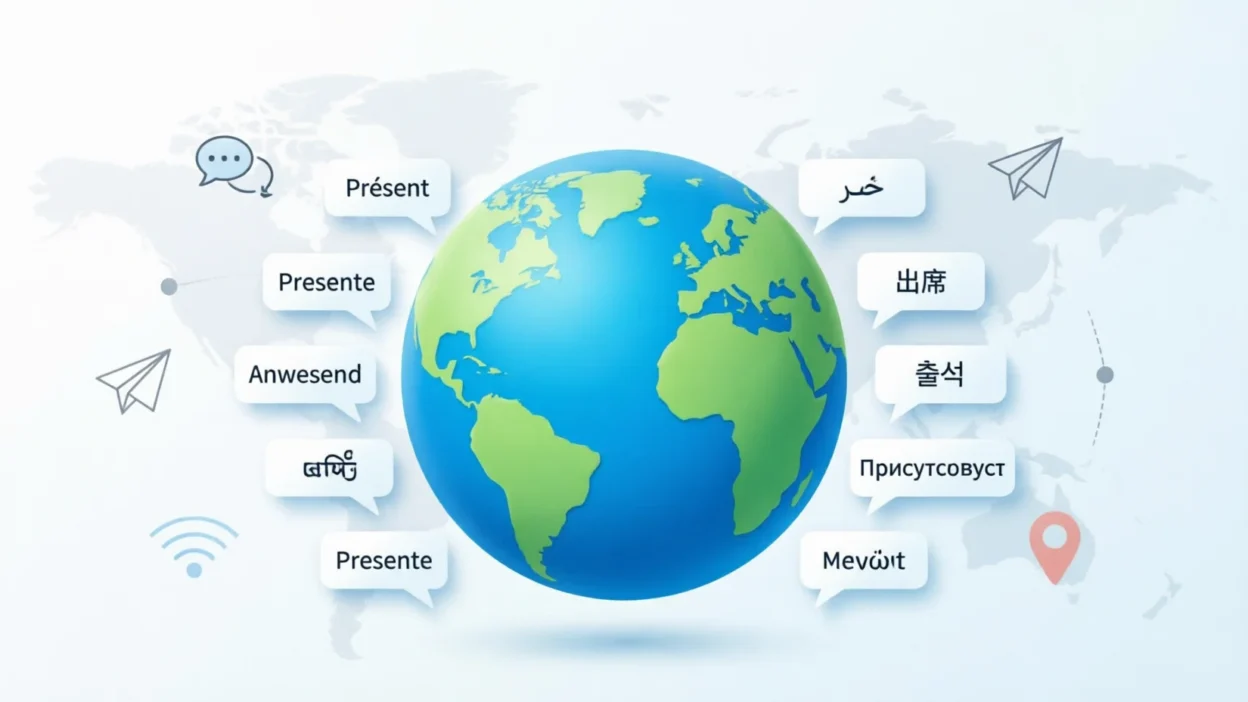
Learning how to say present in different languages is useful if you’re traveling, studying a new language, communicating with international friends, or simply expanding your vocabulary.
The word present can have different meanings, such as a gift, being in attendance, or existing in the current time. In this article, the focus is on “present” as a gift, which is the most common search intent for language translations.
Below, you’ll discover 70 translations of “present” in different languages, along with pronunciation guides, example sentences, and English meanings.
This guide is designed to help learners quickly understand how to use the word naturally across many languages.
Present in Different Languages Table
| Language | Native Phrase | English Pronunciation | Example Sentence | English Meaning |
|---|---|---|---|---|
| English | Present | PREZ-ent | This is your present. | This is your gift. |
| Spanish | Regalo | reh-GAH-lo | Este es tu regalo. | This is your gift. |
| French | Cadeau | ka-DO | Voici ton cadeau. | Here is your gift. |
| German | Geschenk | guh-SHENK | Das ist dein Geschenk. | That is your gift. |
| Italian | Regalo | reh-GAH-lo | Questo è il tuo regalo. | This is your gift. |
| Portuguese | Presente | preh-ZEN-chee | Este é seu presente. | This is your gift. |
| Dutch | Cadeau | ka-DO | Dit is jouw cadeau. | This is your gift. |
| Swedish | Present | preh-SENT | Här är din present. | Here is your gift. |
| Norwegian | Gave | GAH-veh | Her er gaven din. | Here is your gift. |
| Danish | Gave | GAH-veh | Her er din gave. | Here is your gift. |
| Finnish | Lahja | LAHH-ya | Tässä on lahjasi. | Here is your gift. |
| Icelandic | Gjöf | GYERV | Hér er gjöfin þín. | Here is your gift. |
| Russian | Подарок | pa-DA-rak | Это твой подарок. | This is your gift. |
| Ukrainian | Подарунок | po-da-ROO-nok | Це твій подарунок. | This is your gift. |
| Polish | Prezent | PREH-zent | To jest twój prezent. | This is your gift. |
| Czech | Dárek | DAA-rek | To je tvůj dárek. | This is your gift. |
| Slovak | Darček | DAR-chek | Toto je tvoj darček. | This is your gift. |
| Slovenian | Darilo | da-REE-lo | To je tvoje darilo. | This is your gift. |
| Croatian | Poklon | POK-lon | Ovo je tvoj poklon. | This is your gift. |
| Serbian | Поклон | POK-lon | Ово је твој поклон. | This is your gift. |
| Bosnian | Poklon | POK-lon | Ovo je tvoj poklon. | This is your gift. |
| Bulgarian | Подарък | po-DA-rak | Това е твоят подарък. | This is your gift. |
| Romanian | Cadou | ka-DOU | Acesta este cadoul tău. | This is your gift. |
| Greek | Δώρο | THO-ro | Αυτό είναι το δώρο σου. | This is your gift. |
| Turkish | Hediye | he-DEE-ye | Bu senin hediyen. | This is your gift. |
| Arabic | هدية | ha-DEE-ya | هذه هدية لك. | This is a gift for you. |
| Hebrew | מתנה | ma-ta-NAH | זו המתנה שלך. | This is your gift. |
| Persian | هدیه | hed-YEH | این هدیه تو است. | This is your gift. |
| Hindi | उपहार | up-haar | यह आपका उपहार है। | This is your gift. |
| Urdu | تحفہ | TOH-fa | یہ آپ کا تحفہ ہے۔ | This is your gift. |
| Bengali | উপহার | oo-po-HAR | এটি আপনার উপহার। | This is your gift. |
| Punjabi | ਤੋਹਫ਼ਾ | TOH-fa | ਇਹ ਤੁਹਾਡਾ ਤੋਹਫ਼ਾ ਹੈ। | This is your gift. |
| Gujarati | ભેટ | BHET | આ તમારી ભેટ છે. | This is your gift. |
| Marathi | भेट | BHET | ही तुमची भेट आहे. | This is your gift. |
| Tamil | பரிசு | pa-ri-su | இது உங்கள் பரிசு. | This is your gift. |
| Telugu | బహుమతి | ba-hu-ma-ti | ఇది మీ బహుమతి. | This is your gift. |
| Kannada | ಉಡುಗೊರೆ | oo-doo-go-ray | ಇದು ನಿಮ್ಮ ಉಡುಗೊರೆ. | This is your gift. |
| Malayalam | സമ്മാനം | sam-MAA-nam | ഇത് നിങ്ങളുടെ സമ്മാനമാണ്. | This is your gift. |
| Sinhala | තෑග්ග | THAEG-ga | මේ ඔබගේ තෑග්ගයි. | This is your gift. |
| Nepali | उपहार | up-haar | यो तपाईंको उपहार हो। | This is your gift. |
| Chinese (Simplified) | 礼物 | LEE-woo | 这是你的礼物。 | This is your gift. |
| Chinese (Traditional) | 禮物 | LEE-woo | 這是你的禮物。 | This is your gift. |
| Japanese | プレゼント | pu-re-ZEN-to | これはあなたへのプレゼントです。 | This is your present. |
| Korean | 선물 | SON-mul | 이것은 당신의 선물입니다. | This is your gift. |
| Vietnamese | Quà tặng | kwa tang | Đây là quà tặng của bạn. | This is your gift. |
| Thai | ของขวัญ | kong-KWAN | นี่คือของขวัญของคุณ | This is your gift. |
| Indonesian | Hadiah | ha-DEE-ah | Ini hadiahmu. | This is your gift. |
| Malay | Hadiah | ha-DEE-ah | Ini hadiah anda. | This is your gift. |
| Filipino | Regalo | reh-GAH-lo | Ito ang regalo mo. | This is your gift. |
| Swahili | Zawadi | za-WA-di | Hii ni zawadi yako. | This is your gift. |
| Afrikaans | Geskenk | guh-SKENK | Dit is jou geskenk. | This is your gift. |
| Zulu | Isipho | ee-SEE-po | Lesi isipho sakho. | This is your gift. |
| Xhosa | Isipho | ee-SEE-po | Esi sisipho sakho. | This is your gift. |
| Yoruba | Ẹ̀bùn | EH-boon | Eyi ni ẹ̀bùn rẹ. | This is your gift. |
| Igbo | Onyinye | on-YIN-ye | Nke a bụ onyinye gị. | This is your gift. |
| Hausa | Kyauta | kya-OO-ta | Wannan kyautarka ce. | This is your gift. |
| Amharic | ስጦታ | si-TO-ta | ይህ የእርስዎ ስጦታ ነው። | This is your gift. |
| Somali | Hadiyad | ha-DEE-yad | Tani waa hadiyaddaada. | This is your gift. |
| Armenian | Նվեր | nu-VER | Սա քո նվերն է։ | This is your gift. |
| Georgian | საჩუქარი | sa-CHOO-ka-ri | ეს შენი საჩუქარია. | This is your gift. |
| Albanian | Dhuratë | dhu-RA-te | Kjo është dhurata jote. | This is your gift. |
| Lithuanian | Dovana | do-VA-na | Tai tavo dovana. | This is your gift. |
| Latvian | Dāvana | DAA-va-na | Tā ir tava dāvana. | This is your gift. |
| Estonian | Kingitus | KIN-gi-tus | See on sinu kingitus. | This is your gift. |
| Hungarian | Ajándék | a-YAN-dek | Ez a te ajándékod. | This is your gift. |
| Maltese | Rigal | ree-GAL | Dan huwa r-rigal tiegħek. | This is your gift. |
| Irish | Bronntanas | BRUN-ta-nas | Seo do bhronntanas. | Here is your gift. |
| Welsh | Anrheg | AN-hreg | Dyma dy anrheg. | Here is your gift. |
| Basque | Opari | oh-PA-ri | Hau da zure oparia. | This is your gift. |
| Catalan | Regal | reh-GAL | Aquest és el teu regal. | This is your gift. |
| Galician | Agasallo | a-ga-SA-yo | Este é o teu agasallo. | This is your gift. |
| Esperanto | Donaco | do-NA-tso | Jen via donaco. | Here is your gift. |
Why Learn “Present” in All Languages?
Knowing present in all languages helps improve communication, supports language learning, and makes it easier to express kindness across cultures. Whether you’re exchanging gifts while traveling or writing greeting cards, these translations can be useful in many situations.
How to Say Present in Different Languages
The easiest way to remember how to say present in different languages is by practicing one or two new words each day. Reading the pronunciation aloud and using the example sentence helps reinforce your memory.
Present Translations Around the World
Although many languages have unique words, some share similar spellings because of historical and cultural influences. For example, Regalo appears in both Spanish and Filipino, while Hadiah is used in both Indonesian and Malay.
Common Uses of the Word “Present”
Depending on the situation, the word “present” may refer to:
- A birthday gift
- A holiday gift
- A wedding gift
- A surprise gift
- A token of appreciation
Always remember that this article focuses on present as a gift, not “present” meaning current time or attendance.
Tips for Remembering New Vocabulary
- Practice a few languages every day.
- Repeat the pronunciation aloud.
- Write the word in a notebook.
- Use it in a simple sentence.
- Review regularly for better retention.
Conclusion
Learning present in different languages is a fun and practical way to expand your vocabulary and connect with people from around the world.
If you’re interested in travel, education, or cultural exchange, these present translations provide an easy starting point for multilingual communication.
FAQs:
1. How do you say present in different languages?
Different languages use different words, such as Regalo in Spanish, Cadeau in French, Geschenk in German, and 礼物 in Chinese.
2. What is the most common translation of present around the world?
There is no single universal translation, but words like Regalo, Presente, Gift, and Hediye are among the most widely recognized.
3. Is this article about present as a gift?
Yes. Every translation in this guide refers to present meaning a gift.
4. Why are some translations similar?
Many languages have borrowed words from neighboring cultures or share common linguistic roots, resulting in similar spellings and pronunciations.
5. Can I use these translations while traveling?
Yes. These translations are suitable for everyday conversations, greeting cards, shopping, and gift-giving situations.

Brandon Cody is the Administrator of LingoMean, a platform dedicated to helping people discover the right words for every situation. He oversees content quality, website management, and user experience, ensuring readers receive accurate, practical, and easy-to-understand communication guidance.