Saying “bye” is one of the most common ways to end a conversation, but the word changes from language to language. Learning how to say bye in different languages can help you communicate naturally when traveling, making international friends, studying languages, or simply exploring cultures around the world.
From the familiar Spanish “adiós” to the casual Japanese “じゃあね” (jā ne), there are many ways to say goodbye depending on the language, situation, and level of formality. Some expressions are formal, while others are commonly used with friends and family.
In this guide, you will discover bye in all languages through 70 useful translations. Each entry includes the native phrase, an easy English pronunciation, a short real-life example, and its English meaning.
Bye in Different Languages: 70 Useful Translations
The following table answers the common question, “How do you say bye in different languages?” It includes everyday expressions that are useful in real conversations.
| # | Language | Native Phrase | Easy English Pronunciation | Example Sentence | English Meaning |
|---|---|---|---|---|---|
| 1 | English | Bye | Bye | Bye, see you tomorrow. | Goodbye, see you tomorrow. |
| 2 | Spanish | Adiós | Ah-dee-OS | Adiós, nos vemos mañana. | Goodbye, see you tomorrow. |
| 3 | French | Au revoir | Oh ruh-VWAR | Au revoir, à demain. | Goodbye, see you tomorrow. |
| 4 | German | Auf Wiedersehen | Owf VEE-der-zay-en | Auf Wiedersehen, bis morgen. | Goodbye, see you tomorrow. |
| 5 | Italian | Arrivederci | Ah-ree-veh-DER-chee | Arrivederci, a domani. | Goodbye, see you tomorrow. |
| 6 | Portuguese | Tchau | Chow | Tchau, até amanhã. | Bye, see you tomorrow. |
| 7 | Dutch | Tot ziens | Tot zeens | Tot ziens, tot morgen. | Goodbye, see you tomorrow. |
| 8 | Russian | До свидания | Da svee-DAH-nee-ya | До свидания, до завтра. | Goodbye, see you tomorrow. |
| 9 | Ukrainian | До побачення | Do po-BA-chen-nya | До побачення, до завтра. | Goodbye, see you tomorrow. |
| 10 | Polish | Do widzenia | Doh vee-DZEN-ya | Do widzenia, do jutra. | Goodbye, see you tomorrow. |
| 11 | Czech | Na shledanou | Nah SKHLEH-dah-noh | Na shledanou, uvidíme se zítra. | Goodbye, see you tomorrow. |
| 12 | Slovak | Dovidenia | Doh-vee-DEH-nee-ah | Dovidenia, do zajtra. | Goodbye, see you tomorrow. |
| 13 | Slovenian | Nasvidenje | Nahs-vee-DEN-yeh | Nasvidenje, se vidimo jutri. | Goodbye, see you tomorrow. |
| 14 | Croatian | Doviđenja | Doh-vee-JEH-nyah | Doviđenja, vidimo se sutra. | Goodbye, see you tomorrow. |
| 15 | Serbian | Doviđenja | Doh-vee-JEH-nyah | Doviđenja, vidimo se sutra. | Goodbye, see you tomorrow. |
| 16 | Bosnian | Doviđenja | Doh-vee-JEH-nyah | Doviđenja, vidimo se sutra. | Goodbye, see you tomorrow. |
| 17 | Bulgarian | Довиждане | Doh-veezh-DAH-neh | Довиждане, до утре. | Goodbye, see you tomorrow. |
| 18 | Macedonian | Довидување | Doh-vee-DOO-vah-nyeh | Довидување, до утре. | Goodbye, see you tomorrow. |
| 19 | Greek | Αντίο | An-TEE-oh | Αντίο, τα λέμε αύριο. | Goodbye, see you tomorrow. |
| 20 | Romanian | La revedere | Lah reh-veh-DEH-reh | La revedere, pe mâine. | Goodbye, see you tomorrow. |
| 21 | Hungarian | Viszlát | VEES-laat | Viszlát, holnap találkozunk. | Goodbye, see you tomorrow. |
| 22 | Albanian | Mirupafshim | Mee-roo-PAHF-shim | Mirupafshim, shihemi nesër. | Goodbye, see you tomorrow. |
| 23 | Turkish | Hoşça kal | Hosh-cha kahl | Hoşça kal, yarın görüşürüz. | Goodbye, see you tomorrow. |
| 24 | Azerbaijani | Sağ ol | Sah-ol | Sağ ol, sabah görüşərik. | Thanks, see you tomorrow. |
| 25 | Georgian | ნახვამდის | Nakh-vam-dees | ნახვამდის, ხვალ შევხვდებით. | Goodbye, see you tomorrow. |
| 26 | Armenian | Ցտեսություն | Tses-teh-soo-TYUN | Ցտեսություն, մինչև վաղը։ | Goodbye, until tomorrow. |
| 27 | Persian | خداحافظ | Khod-ah-HA-fez | خداحافظ، فردا میبینمت. | Goodbye, see you tomorrow. |
| 28 | Arabic | مع السلامة | Ma’a as-sa-LA-mah | مع السلامة، أراك غدًا. | Goodbye, see you tomorrow. |
| 29 | Hebrew | להתראות | Leh-hit-ra-OT | להתראות, נתראה מחר. | Goodbye, see you tomorrow. |
| 30 | Hindi | अलविदा | Al-vee-DAA | अलविदा, कल मिलते हैं। | Goodbye, see you tomorrow. |
| 31 | Urdu | خدا حافظ | Khuda HAA-fiz | خدا حافظ، کل ملتے ہیں۔ | Goodbye, see you tomorrow. |
| 32 | Bengali | বিদায় | Bi-DAI | বিদায়, কাল দেখা হবে। | Goodbye, see you tomorrow. |
| 33 | Punjabi | ਅਲਵਿਦਾ | Al-vee-daa | ਅਲਵਿਦਾ, ਕੱਲ੍ਹ ਮਿਲਦੇ ਹਾਂ। | Goodbye, see you tomorrow. |
| 34 | Gujarati | આવજો | Aav-jo | આવજો, કાલે મળીશું. | Goodbye, see you tomorrow. |
| 35 | Marathi | निरोप | Nee-ROHP | निरोप, उद्या भेटूया. | Goodbye, see you tomorrow. |
| 36 | Nepali | बिदाइ | Bee-DAI | बिदाइ, भोलि भेटौँला। | Goodbye, see you tomorrow. |
| 37 | Sinhala | ආයුබෝවන් | Aa-yoo-BO-wan | ආයුබෝවන්, හෙට හමුවෙමු. | Goodbye, see you tomorrow. |
| 38 | Tamil | விடைபெறுகிறேன் | Vi-dai-peh-ruh-GEE-ren | விடைபெறுகிறேன், நாளை சந்திப்போம். | Goodbye, see you tomorrow. |
| 39 | Telugu | వీడ్కోలు | Veed-KOH-loo | వీడ్కోలు, రేపు కలుద్దాం. | Goodbye, see you tomorrow. |
| 40 | Kannada | ವಿದಾಯ | Vi-DAA-ya | ವಿದಾಯ, ನಾಳೆ ಭೇಟಿಯಾಗೋಣ. | Goodbye, see you tomorrow. |
| 41 | Malayalam | വിട | Vi-DA | വിട, നാളെ കാണാം. | Goodbye, see you tomorrow. |
| 42 | Odia | ବିଦାୟ | Bi-DA-ya | ବିଦାୟ, କାଲି ଦେଖା ହେବ। | Goodbye, see you tomorrow. |
| 43 | Assamese | বিদায় | Bi-DAI | বিদায়, কাইলৈ দেখা হ’ব। | Goodbye, see you tomorrow. |
| 44 | Burmese | သွားတော့မယ် | Thwa taw-meh | သွားတော့မယ်၊ မနက်ဖြန်တွေ့မယ်။ | I’m leaving, see you tomorrow. |
| 45 | Thai | ลาก่อน | Laa-gon | ลาก่อน แล้วพบกันพรุ่งนี้ | Goodbye, see you tomorrow. |
| 46 | Lao | ລາກ່ອນ | Laa-gon | ລາກ່ອນ, ພົບກັນມື້ອື່ນ. | Goodbye, see you tomorrow. |
| 47 | Khmer | លាហើយ | Lea-haey | លាហើយ ជួបគ្នាថ្ងៃស្អែក។ | Goodbye, see you tomorrow. |
| 48 | Vietnamese | Tạm biệt | Tam byet | Tạm biệt, hẹn gặp lại ngày mai. | Goodbye, see you tomorrow. |
| 49 | Indonesian | Sampai jumpa | Sahm-pie JOOM-pah | Sampai jumpa besok. | Goodbye, see you tomorrow. |
| 50 | Malay | Selamat tinggal | Seh-lah-maht TEEN-gahl | Selamat tinggal, jumpa lagi esok. | Goodbye, see you tomorrow. |
| 51 | Filipino | Paalam | Pah-ah-LAHM | Paalam, magkita tayo bukas. | Goodbye, see you tomorrow. |
| 52 | Japanese | さようなら | Sah-yoh-NAH-rah | さようなら、また明日。 | Goodbye, see you tomorrow. |
| 53 | Korean | 안녕히 가세요 | An-nyong-hee ga-SEH-yo | 안녕히 가세요, 내일 봐요. | Goodbye, see you tomorrow. |
| 54 | Chinese (Mandarin) | 再见 | Zai-Jyen | 再见,明天见。 | Goodbye, see you tomorrow. |
| 55 | Cantonese | 再見 | Joi-GIN | 再見,聽日見。 | Goodbye, see you tomorrow. |
| 56 | Mongolian | Баяртай | Bah-YAR-tie | Баяртай, маргааш уулзъя. | Goodbye, see you tomorrow. |
| 57 | Kazakh | Сау бол | Sow bol | Сау бол, ертең кездесеміз. | Goodbye, see you tomorrow. |
| 58 | Uzbek | Xayr | Khayr | Xayr, ertaga ko‘rishamiz. | Goodbye, see you tomorrow. |
| 59 | Kyrgyz | Кош бол | Kosh bol | Кош бол, эртең көрүшөбүз. | Goodbye, see you tomorrow. |
| 60 | Tajik | Хайр | Khayr | Хайр, то пагоҳ. | Goodbye, until tomorrow. |
| 61 | Turkmen | Hoş gal | Hosh gahl | Hoş gal, ertir görüşeris. | Goodbye, see you tomorrow. |
| 62 | Swahili | Kwaheri | Kwa-HEH-ree | Kwaheri, tutaonana kesho. | Goodbye, see you tomorrow. |
| 63 | Afrikaans | Totsiens | Tot-seens | Totsiens, sien jou môre. | Goodbye, see you tomorrow. |
| 64 | Zulu | Sala kahle | Sah-lah KAH-leh | Sala kahle, sizobonana kusasa. | Goodbye, see you tomorrow. |
| 65 | Xhosa | Hamba kakuhle | Hahm-bah kah-KHOO-leh | Hamba kakuhle, siza kubonana ngomso. | Goodbye, see you tomorrow. |
| 66 | Amharic | ደህና ሁን | Dehna hoon | ደህና ሁን፣ ነገ እንገናኛለን። | Goodbye, see you tomorrow. |
| 67 | Somali | Nabadgelyo | Nah-bad-gel-yoh | Nabadgelyo, berri ayaan is aragnaa. | Goodbye, see you tomorrow. |
| 68 | Malagasy | Veloma | Veh-LOH-mah | Veloma, mandra-pihaona rahampitso. | Goodbye, see you tomorrow. |
| 69 | Haitian Creole | Orevwa | Oh-reh-VWA | Orevwa, n a wè demen. | Goodbye, see you tomorrow. |
| 70 | Latin | Vale | WAH-leh | Vale, amice. | Goodbye, friend. |
How to Say Bye in Different Languages
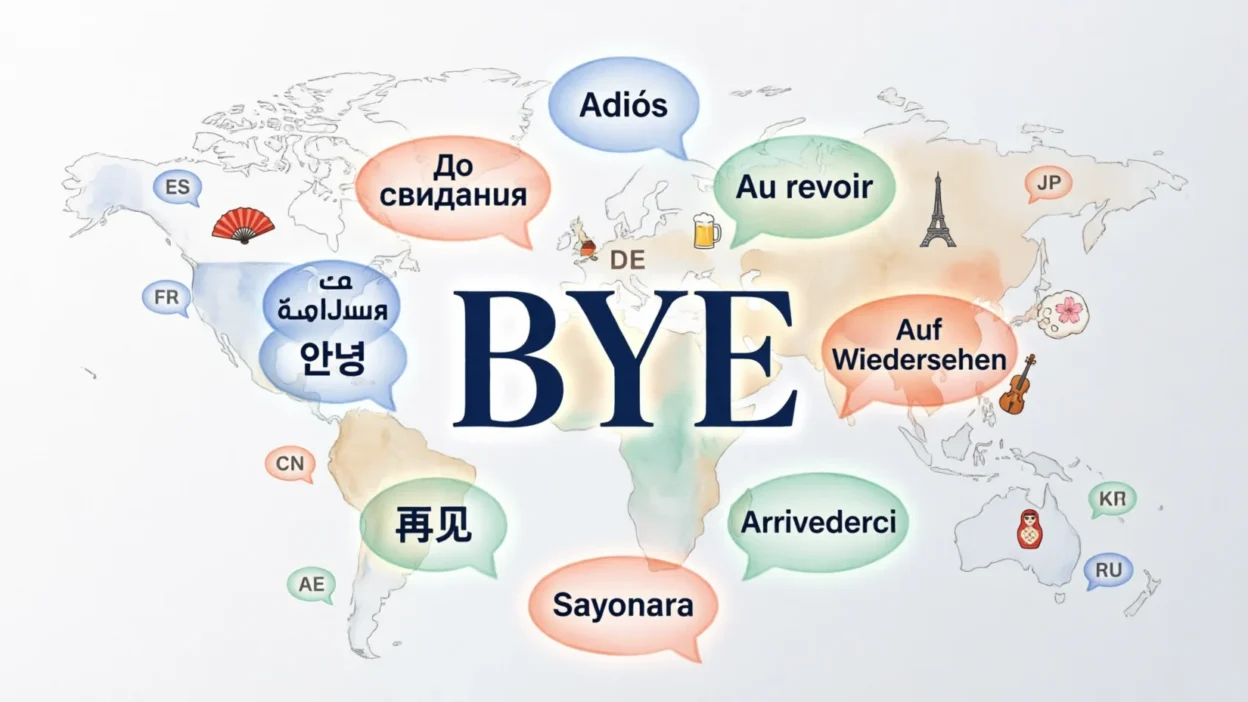
The easiest way to learn bye in different languages is to start with the expressions used most often in everyday conversations. Words such as “tchau,” “adiós,” “au revoir,” “sampai jumpa,” and “再见” are useful starting points for travelers and language learners.
Remember that some languages have different goodbye expressions depending on who is leaving, who is staying, and how formal the situation is. Therefore, a direct translation of “bye” may not always be the expression native speakers use in every situation.
Casual Ways to Say Bye in Different Languages
Casual goodbyes are commonly used between friends, classmates, coworkers, and family members. In Portuguese, for example, “tchau” is a familiar everyday goodbye. Japanese speakers may use “じゃあね” or “またね” casually with people they know well.
Similarly, English speakers often use “bye,” “see you,” or “see you later” rather than a formal expression such as “farewell.” When learning bye translations, context is just as important as vocabulary.
Formal Ways to Say Goodbye Around the World
Formal situations often require more respectful expressions. French “au revoir,” German “auf Wiedersehen,” and Polish “do widzenia” are examples of expressions commonly associated with more neutral or formal contexts.
If you are speaking to someone you have just met, a teacher, customer, senior colleague, or another person in a formal setting, using a polite goodbye is generally a safer choice than using slang.
Bye in European Languages
Europe has a wide variety of languages, and each has its own way of expressing goodbye. Spanish uses “adiós,” Italian uses “arrivederci,” Romanian uses “la revedere,” and Greek uses “αντίο.”
Many European languages also have shorter informal expressions. Learning both formal and casual forms can make your conversations sound more natural.
Bye in Asian Languages
Asian languages offer many interesting ways to say goodbye. Mandarin Chinese uses “再见,” Japanese commonly uses expressions such as “さようなら” in appropriate contexts, and Korean uses “안녕히 가세요” when speaking to someone who is leaving.
In many Asian languages, social relationships and context can influence which goodbye expression sounds most natural. This is why memorizing only one translation may not always be enough.
Bye in Middle Eastern Languages
Arabic, Persian, Hebrew, Urdu, and other languages spoken across the Middle East and surrounding regions have their own distinctive farewell expressions.
For example, Arabic “مع السلامة” is a widely recognized way to say goodbye, while Persian “خداحافظ” is commonly used as a farewell. Urdu speakers frequently use “خدا حافظ” in everyday and respectful conversations.
Bye in African Languages
Africa is home to thousands of languages, making its linguistic diversity remarkable. Common farewell expressions include Swahili “kwaheri,” Afrikaans “totsiens,” Zulu “sala kahle,” and Xhosa “hamba kakuhle.”
These expressions demonstrate why learning bye around the world can be a useful way to explore different cultures and languages.
Why Learn Bye in Different Languages?
Learning how to say goodbye in another language can make conversations more personal and memorable. Even a simple word can show that you have taken an interest in another culture.
Knowing basic farewell expressions can also help travelers communicate more confidently. Whether you are leaving a restaurant, ending a conversation, saying goodbye to a new friend, or finishing a business meeting, the right expression can make your communication more natural.
Tips for Learning Bye Translations
When learning bye in all languages, focus on pronunciation as well as spelling. Some languages use writing systems that may look unfamiliar, so the pronunciation guide can make the expression easier to practice.
It is also helpful to learn whether a phrase is formal, informal, or context-dependent. Listen to native speakers whenever possible and repeat the phrase several times until it feels comfortable.
Most importantly, do not worry about having a perfect accent at first. Learning and using a simple farewell correctly is already a useful step toward communicating in another language.
Conclusion
Learning bye in different languages is a simple and practical way to expand your vocabulary and connect with people from different cultures. From Spanish “adiós” and French “au revoir” to Japanese “さようなら” and Swahili “kwaheri,” each language offers its own unique way to end a conversation.
Use the 70 translations above as a quick reference whenever you want to know how to say bye in different languages. With regular practice and attention to context, these simple expressions can become an easy part of your international vocabulary.
FAQs:
1. What is “bye” in different languages?
“Bye” has different translations around the world. Examples include “adiós” in Spanish, “au revoir” in French, “arrivederci” in Italian, “tchau” in Portuguese, “再见” in Mandarin Chinese, and “kwaheri” in Swahili.
2. How do you say “bye” in 10 different languages?
You can say “bye” as “adiós” in Spanish, “au revoir” in French, “arrivederci” in Italian, “auf Wiedersehen” in German, “tchau” in Portuguese, “tot ziens” in Dutch, “再见” in Chinese, “さようなら” in Japanese, “안녕히 가세요” in Korean, and “kwaheri” in Swahili.
3. What is the most common way to say bye in Spanish?
“Adiós” is a well-known Spanish word for goodbye. In casual conversations, Spanish speakers may also use expressions such as “chao” or “hasta luego,” depending on the situation and region.
4. What is “bye” in Japanese?
“さようなら” (sayōnara) means goodbye in Japanese and is used in certain situations. For casual conversations with friends, expressions such as “じゃあね” (jā ne) or “またね” (mata ne) can be more natural.
5. Why are there different ways to say bye in different languages?
Languages reflect different cultures, social relationships, and communication styles. A language may have separate expressions for formal, casual, temporary, or context-specific farewells, so the best translation depends on the situation.

Brandon Cody is the Administrator of LingoMean, a platform dedicated to helping people discover the right words for every situation. He oversees content quality, website management, and user experience, ensuring readers receive accurate, practical, and easy-to-understand communication guidance.