Saying “hello” is one of the simplest ways to start a conversation, make someone feel welcome, and show respect for another culture. Although the word and pronunciation change from language to language, the purpose is universal: greeting someone warmly.
If you are traveling, learning a new language, communicating with international friends, or simply curious about languages, learning how to say hello in different languages can be both useful and interesting.
This guide covers 70 languages, including the native greeting, an easy English pronunciation, and a short example you can use in everyday conversation.
Below, you will find hello in all languages in one easy-to-read table. These hello translations also show how a simple greeting connects people around the world.
How to Say Hello in Different Languages
Here are 70 common ways to say “hello” around the world. Some languages have several greetings depending on formality or situation, so the examples below use a natural, commonly understood greeting.
| # | Language | Native Phrase | Easy English Pronunciation | Example Sentence | English Meaning |
|---|---|---|---|---|---|
| 1 | English | Hello | heh-LOH | Hello, how are you? | Hello, how are you? |
| 2 | Spanish | Hola | OH-lah | Hola, ¿cómo estás? | Hello, how are you? |
| 3 | French | Bonjour | bon-ZHOOR | Bonjour, comment allez-vous ? | Hello, how are you? |
| 4 | German | Hallo | HAH-loh | Hallo, wie geht es dir? | Hello, how are you? |
| 5 | Italian | Ciao | chow | Ciao, come stai? | Hello, how are you? |
| 6 | Portuguese | Olá | oh-LAH | Olá, tudo bem? | Hello, is everything okay? |
| 7 | Dutch | Hallo | HAH-loh | Hallo, hoe gaat het? | Hello, how are you? |
| 8 | Russian | Здравствуйте | ZDRAH-stvooy-tyeh | Здравствуйте, как вы? | Hello, how are you? |
| 9 | Ukrainian | Привіт | pryh-VEET | Привіт, як справи? | Hello, how are things? |
| 10 | Polish | Cześć | cheshch | Cześć, jak się masz? | Hello, how are you? |
| 11 | Czech | Ahoj | ahoy | Ahoj, jak se máš? | Hello, how are you? |
| 12 | Slovak | Ahoj | ahoy | Ahoj, ako sa máš? | Hello, how are you? |
| 13 | Slovenian | Živjo | ZHEEV-yoh | Živjo, kako si? | Hello, how are you? |
| 14 | Croatian | Bok | bohk | Bok, kako si? | Hello, how are you? |
| 15 | Serbian | Здраво | ZDRAH-voh | Здраво, како си? | Hello, how are you? |
| 16 | Bosnian | Zdravo | ZDRAH-voh | Zdravo, kako si? | Hello, how are you? |
| 17 | Bulgarian | Здравей | ZDRAH-vey | Здравей, как си? | Hello, how are you? |
| 18 | Macedonian | Здраво | ZDRAH-voh | Здраво, како си? | Hello, how are you? |
| 19 | Romanian | Salut | sah-LOOT | Salut, ce faci? | Hello, how are you? |
| 20 | Hungarian | Szia | SEE-yah | Szia, hogy vagy? | Hello, how are you? |
| 21 | Greek | Γεια σου | YAH soo | Γεια σου, τι κάνεις; | Hello, how are you? |
| 22 | Albanian | Përshëndetje | puhr-shun-DET-yeh | Përshëndetje, si jeni? | Hello, how are you? |
| 23 | Swedish | Hej | hey | Hej, hur mår du? | Hello, how are you? |
| 24 | Danish | Hej | hi | Hej, hvordan har du det? | Hello, how are you? |
| 25 | Norwegian | Hei | hi | Hei, hvordan har du det? | Hello, how are you? |
| 26 | Finnish | Hei | hay | Hei, mitä kuuluu? | Hello, how are you? |
| 27 | Icelandic | Halló | ha-LOH | Halló, hvernig hefurðu það? | Hello, how are you? |
| 28 | Estonian | Tere | TEH-reh | Tere, kuidas läheb? | Hello, how are you? |
| 29 | Latvian | Sveiki | SVAY-kee | Sveiki, kā jums klājas? | Hello, how are you? |
| 30 | Lithuanian | Labas | LAH-bahs | Labas, kaip sekasi? | Hello, how are you? |
| 31 | Irish | Dia dhuit | DEE-ah gwit | Dia dhuit, conas atá tú? | Hello, how are you? |
| 32 | Welsh | Helo | HEH-loh | Helo, sut wyt ti? | Hello, how are you? |
| 33 | Scottish Gaelic | Halò | ha-LOH | Halò, ciamar a tha thu? | Hello, how are you? |
| 34 | Maltese | Bongu | BON-joo | Bongu, kif int? | Hello, how are you? |
| 35 | Turkish | Merhaba | mehr-hah-BAH | Merhaba, nasılsın? | Hello, how are you? |
| 36 | Azerbaijani | Salam | sah-LAHM | Salam, necəsən? | Hello, how are you? |
| 37 | Armenian | Բարև | bah-REV | Բարև, ինչպե՞ս ես։ | Hello, how are you? |
| 38 | Georgian | გამარჯობა | gah-mar-JOH-bah | გამარჯობა, როგორ ხარ? | Hello, how are you? |
| 39 | Persian | سلام | sah-LAHM | سلام، حالت چطوره؟ | Hello, how are you? |
| 40 | Arabic | مرحبًا | mar-ha-ban | مرحبًا، كيف حالك؟ | Hello, how are you? |
| 41 | Hebrew | שלום | shah-LOHM | שלום, מה שלומך? | Hello, how are you? |
| 42 | Hindi | नमस्ते | nuh-muh-STAY | नमस्ते, आप कैसे हैं? | Hello, how are you? |
| 43 | Urdu | سلام | sah-LAAM | سلام، آپ کیسے ہیں؟ | Hello, how are you? |
| 44 | Bengali | নমস্কার | nomosh-KAR | নমস্কার, আপনি কেমন আছেন? | Hello, how are you? |
| 45 | Punjabi | ਸਤ ਸ੍ਰੀ ਅਕਾਲ | sat sree ah-KAAL | ਸਤ ਸ੍ਰੀ ਅਕਾਲ, ਤੁਸੀਂ ਕਿਵੇਂ ਹੋ? | Hello, how are you? |
| 46 | Gujarati | નમસ્તે | nuh-muh-STAY | નમસ્તે, તમે કેમ છો? | Hello, how are you? |
| 47 | Marathi | नमस्कार | nuh-muh-SKAAR | नमस्कार, तुम्ही कसे आहात? | Hello, how are you? |
| 48 | Nepali | नमस्ते | nuh-muh-STAY | नमस्ते, तपाईंलाई कस्तो छ? | Hello, how are you? |
| 49 | Sinhala | ආයුබෝවන් | ah-yoo-BOH-wan | ආයුබෝවන්, ඔබට කොහොමද? | Hello, how are you? |
| 50 | Tamil | வணக்கம் | vah-nuh-KKAM | வணக்கம், எப்படி இருக்கிறீர்கள்? | Hello, how are you? |
| 51 | Telugu | నమస్కారం | nuh-muh-SKAA-ram | నమస్కారం, మీరు ఎలా ఉన్నారు? | Hello, how are you? |
| 52 | Kannada | ನಮಸ್ಕಾರ | nuh-muh-SKAA-rah | ನಮಸ್ಕಾರ, ಹೇಗಿದ್ದೀರಿ? | Hello, how are you? |
| 53 | Malayalam | നമസ്കാരം | nuh-muh-SKAA-ram | നമസ്കാരം, സുഖമാണോ? | Hello, are you well? |
| 54 | Thai | สวัสดี | sah-wat-DEE | สวัสดี คุณสบายดีไหม? | Hello, are you well? |
| 55 | Lao | ສະບາຍດີ | sah-bye-DEE | ສະບາຍດີ, ສະບາຍດີບໍ? | Hello, are you well? |
| 56 | Khmer | សួស្តី | soo-ah-STAY | សួស្តី អ្នកសុខសប្បាយទេ? | Hello, are you well? |
| 57 | Vietnamese | Xin chào | sin chow | Xin chào, bạn khỏe không? | Hello, are you well? |
| 58 | Indonesian | Halo | HAH-loh | Halo, apa kabar? | Hello, how are you? |
| 59 | Malay | Helo | HEH-loh | Helo, apa khabar? | Hello, how are you? |
| 60 | Filipino | Kumusta | koo-MOOS-tah | Kumusta, kamusta ka? | Hello, how are you? |
| 61 | Mandarin Chinese | 你好 | nee-HOW | 你好,你好吗? | Hello, how are you? |
| 62 | Japanese | こんにちは | kon-nee-chee-wah | こんにちは、お元気ですか? | Hello, how are you? |
| 63 | Korean | 안녕하세요 | an-nyeong-ha-SEH-yo | 안녕하세요, 잘 지내세요? | Hello, how are you? |
| 64 | Mongolian | Сайн байна уу | sain BAI-na oo | Сайн байна уу? | Hello, how are you? |
| 65 | Swahili | Jambo | JAM-boh | Jambo, habari yako? | Hello, how are you? |
| 66 | Amharic | ሰላም | seh-LAHM | ሰላም፣ እንዴት ነህ? | Hello, how are you? |
| 67 | Zulu | Sawubona | sah-woo-BOH-nah | Sawubona, unjani? | Hello, how are you? |
| 68 | Xhosa | Molo | MOH-loh | Molo, unjani? | Hello, how are you? |
| 69 | Afrikaans | Hallo | HAH-loh | Hallo, hoe gaan dit? | Hello, how are you? |
| 70 | Malagasy | Salama | sah-LAH-mah | Salama, manao ahoana ianao? | Hello, how are you? |
Why Learn Hello in Different Languages?
Learning a basic greeting is an easy way to become familiar with another language. “Hello” is often one of the first words people learn because it is useful in introductions, travel, school, work, and everyday conversations.
Knowing a few international greetings can also make conversations feel more welcoming. Even when you do not speak a language fluently, using a person’s native greeting can be a thoughtful way to begin a conversation.
Hello in All Languages: What You Should Know
There is not always one universal translation for “hello” in every language. Some languages use different greetings based on age, social status, time of day, or how formal the situation is.
For example, a language may have one greeting for friends and another for formal situations. The table above therefore focuses on common greetings that can be understood naturally in everyday communication.
Formal and Informal Ways to Say Hello
Some languages make a clear distinction between formal and informal greetings.
For example, French commonly uses “Bonjour” as a polite daytime greeting, while “Salut” is more casual. Spanish speakers may use “Hola” in both casual and many general situations. Japanese also has greetings that vary depending on the time of day and level of formality.
When speaking to someone you have just met, choosing the more polite greeting is usually a safe approach.
Hello Translations for Travel
Learning how to say hello in the local language can be especially useful when traveling. A simple greeting can help you start conversations with hotel staff, restaurant workers, tour guides, shopkeepers, and local residents.
You do not need to memorize an entire language before traveling. Learning a few basic expressions such as hello, thank you, please, and goodbye can make everyday interactions easier.
How to Pronounce Hello in Different Languages
Pronunciation can vary significantly between languages. The pronunciation column in the table uses simple English-style spellings to give beginners a general idea of how each greeting sounds.
These pronunciations are approximate rather than detailed phonetic transcriptions. For accurate pronunciation, listening to native speakers is the best way to learn the exact sounds, rhythm, and intonation.
Hello Around the World
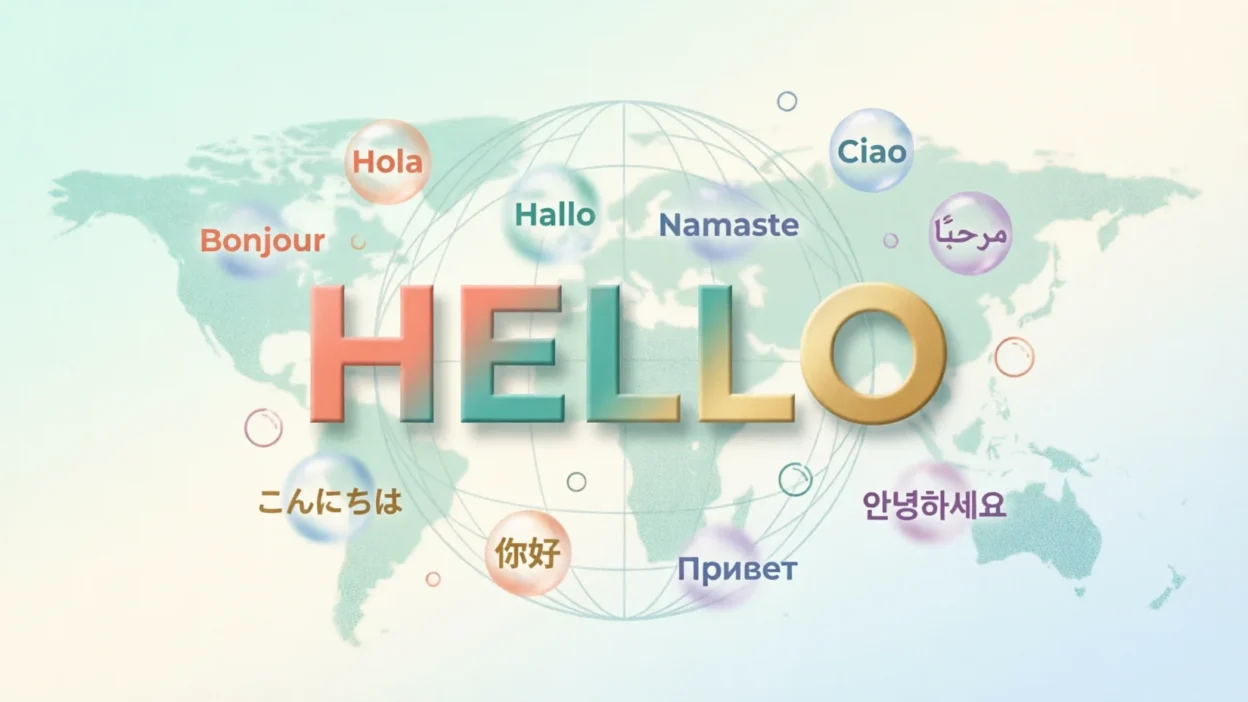
Greetings show how languages and cultures differ while also demonstrating something they share. From “Hola” in Spanish to “Bonjour” in French, “Namaste” in Hindi, “Nǐ hǎo” in Mandarin Chinese, and “Jambo” in Swahili, people around the world have many ways to welcome one another.
Exploring hello around the world is therefore more than memorizing vocabulary. It is an introduction to the diversity of human communication.
Common Uses of Hello
The word “hello” and its equivalents can be used in several everyday situations, including:
- Starting a conversation
- Greeting a friend
- Meeting someone for the first time
- Answering or starting a phone call
- Welcoming a visitor
- Greeting someone while traveling
- Opening a formal or informal conversation
The appropriate greeting depends on the language, culture, relationship, and situation.
Tips for Learning Greetings in a New Language
Start with one or two languages instead of trying to memorize everything at once. Say the greeting aloud several times and connect it with a real-life situation.
You can also practice greetings with short questions such as “How are you?” or “What is your name?” This makes the vocabulary more useful because you learn how the words work in an actual conversation.
Most importantly, do not worry about having a perfect accent at first. A sincere effort to use someone’s language is often a great way to begin communicating.
Conclusion
Learning hello in different languages is a simple and useful way to explore languages and cultures around the world. With 70 greetings in this guide, you can discover how people welcome each other in different parts of the world.
If you are traveling, studying languages, meeting international friends, or improving your vocabulary, knowing how to say hello is a valuable first step.
FAQs:
1. How do you say hello in different languages?
“Hello” can be said in many ways, including “Hola” in Spanish, “Bonjour” in French, “Hallo” in German, “Ciao” in Italian, “Namaste” in Hindi, “Nǐ hǎo” in Mandarin Chinese, and “Jambo” in Swahili.
2. What is the most common way to say hello around the world?
There is no single greeting that is used everywhere. However, many languages have short, commonly used greetings equivalent to “hello,” such as “Hola,” “Bonjour,” “Hallo,” “Salam,” and “Ciao.”
3. How do you say hello in 70 languages?
You can find 70 translations of hello in the table above, including the native phrase, an easy English pronunciation, and a practical example sentence for each language.
4. What is hello in all languages?
There is no single list containing every language because thousands of languages and varieties are spoken worldwide. The table in this article provides 70 widely recognized examples of how to say hello in different languages.
5. Why should I learn how to say hello in another language?
Learning a basic greeting can help you communicate more comfortably, show respect for another culture, and make a friendly first impression. It is also one of the easiest vocabulary words for beginners to learn.

Anthony Dylan is a language enthusiast and content writer at LingoMean, where he helps readers understand what to say in different situations. He creates clear, practical, and engaging guides that improve communication, confidence, and everyday conversations.