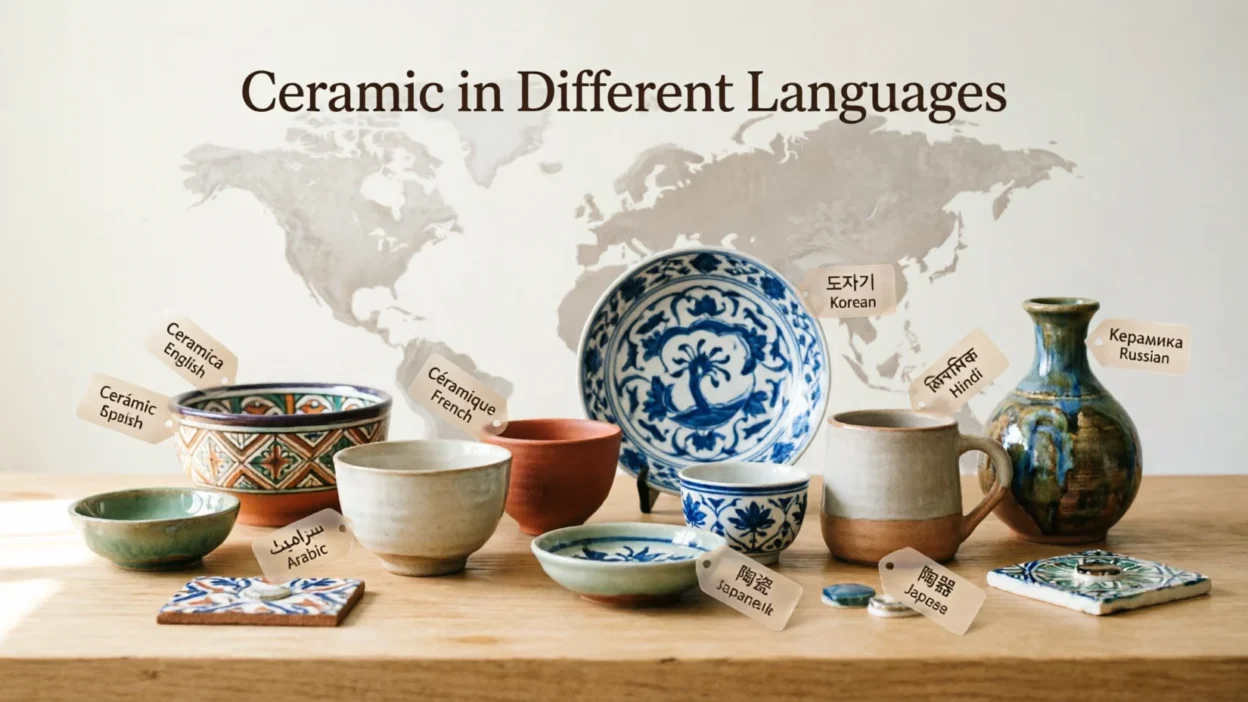
Ceramic is one of the most widely used materials in homes, construction, art, and manufacturing.
From beautiful pottery and decorative vases to floor tiles, dishes, and kitchenware, ceramic products are found in almost every country. If you’re looking for ceramic in different languages, you’ve come to the right place.
Learning ceramic in all languages is useful for travelers, students, language learners, artists, importers, exporters, and professionals working in the construction or interior design industries.
Knowing how to say ceramic in different languages can make communication easier when shopping, reading product labels, or discussing materials with people from around the world.
This guide provides accurate ceramic translations in many of the world’s most spoken languages. Along with each translation, you’ll find an easy English pronunciation, a simple real-life example sentence, and its English meaning.
These examples make it easier to remember the word and use it correctly in everyday conversations.
If you’re studying a new language, working with international suppliers, or simply curious about how to say ceramic in different languages, this article offers a practical and easy-to-read resource.
The mobile-friendly table below is designed for quick reference and is optimized for readers looking for ceramic around the world.
By the end of this guide, you’ll know how the word “ceramic” is spoken across dozens of countries and cultures.
Ceramic in Different Languages 70
| # | Language | Native Phrase | Easy English Pronunciation | Example Sentence | English Meaning |
|---|---|---|---|---|---|
| 1 | English | Ceramic | suh-RAM-ik | This vase is made of ceramic. | This vase is made of ceramic. |
| 2 | Spanish | Cerámica | seh-RAH-mee-kah | Este plato es de cerámica. | This plate is made of ceramic. |
| 3 | French | Céramique | say-rah-MEEK | Ce bol est en céramique. | This bowl is made of ceramic. |
| 4 | German | Keramik | keh-RAH-mik | Diese Fliese ist aus Keramik. | This tile is made of ceramic. |
| 5 | Italian | Ceramica | cheh-RAH-mee-kah | Questo vaso è in ceramica. | This vase is made of ceramic. |
| 6 | Portuguese | Cerâmica | seh-RAH-mee-kah | Esta xícara é de cerâmica. | This cup is made of ceramic. |
| 7 | Dutch | Keramiek | keh-rah-MEEK | Deze kom is van keramiek. | This bowl is made of ceramic. |
| 8 | Russian | Керамика | ke-RA-mi-ka | Эта чашка из керамики. | This cup is made of ceramic. |
| 9 | Ukrainian | Кераміка | ke-ra-MEE-ka | Ця тарілка з кераміки. | This plate is made of ceramic. |
| 10 | Polish | Ceramika | tse-ra-MEE-ka | Ten wazon jest z ceramiki. | This vase is made of ceramic. |
| 11 | Czech | Keramika | keh-RA-mee-ka | Tato miska je z keramiky. | This bowl is made of ceramic. |
| 12 | Slovak | Keramika | keh-RA-mee-ka | Táto dlaždica je z keramiky. | This tile is made of ceramic. |
| 13 | Hungarian | Kerámia | keh-RAA-mee-ah | Ez a bögre kerámiából készült. | This mug is made of ceramic. |
| 14 | Romanian | Ceramică | che-RA-mi-kuh | Această farfurie este din ceramică. | This plate is made of ceramic. |
| 15 | Bulgarian | Керамика | ke-RA-mi-ka | Тази ваза е от керамика. | This vase is made of ceramic. |
| 16 | Greek | Κεραμικό | keh-ra-mee-KO | Αυτό είναι κεραμικό πιάτο. | This is a ceramic plate. |
| 17 | Turkish | Seramik | seh-ra-MIK | Bu tabak seramiktir. | This plate is ceramic. |
| 18 | Arabic | سيراميك | see-ra-MEEK | هذا الطبق من السيراميك. | This plate is made of ceramic. |
| 19 | Hebrew | קרמיקה | keh-ra-MEE-ka | האגרטל עשוי מקרמיקה. | The vase is made of ceramic. |
| 20 | Persian | سرامیک | seh-ra-MEEK | این کاسه سرامیکی است. | This bowl is ceramic. |
| 21 | Urdu | سیرامک | see-RA-mik | یہ کپ سیرامک کا ہے۔ | This cup is made of ceramic. |
| 22 | Hindi | सिरेमिक | si-REH-mik | यह प्लेट सिरेमिक की है। | This plate is made of ceramic. |
| 23 | Punjabi | ਸਿਰਾਮਿਕ | si-RA-mik | ਇਹ ਕੱਪ ਸਿਰਾਮਿਕ ਦਾ ਹੈ। | This cup is made of ceramic. |
| 24 | Bengali | সিরামিক | shi-RA-mik | এটি একটি সিরামিক বাটি। | This is a ceramic bowl. |
| 25 | Gujarati | સિરામિક | si-RA-mik | આ થાળી સિરામિકની છે. | This plate is ceramic. |
| 26 | Marathi | सिरॅमिक | si-RA-mik | ही वाटी सिरॅमिकची आहे. | This bowl is ceramic. |
| 27 | Tamil | செராமிக் | se-RA-mik | இது செராமிக் கிண்ணம். | This is a ceramic bowl. |
| 28 | Telugu | సిరామిక్ | si-RA-mik | ఇది సిరామిక్ ప్లేట్. | This is a ceramic plate. |
| 29 | Kannada | ಸೆರಾಮಿಕ್ | se-RA-mik | ಇದು ಸೆರಾಮಿಕ್ ಕಪ್. | This is a ceramic cup. |
| 30 | Malayalam | സെറാമിക് | se-RA-mik | ഇത് സെറാമിക് പാത്രമാണ്. | This is a ceramic dish. |
| 31 | Sinhala | සෙරමික් | seh-ra-MIK | මෙය සෙරමික් බඳුනකි. | This is a ceramic bowl. |
| 32 | Chinese (Simplified) | 陶瓷 | tao-chi | 这个杯子是陶瓷做的。 | This cup is made of ceramic. |
| 33 | Chinese (Traditional) | 陶瓷 | tao-chi | 這個花瓶是陶瓷做的。 | This vase is made of ceramic. |
| 34 | Japanese | 陶器 | toh-kee | この皿は陶器です。 | This plate is ceramic. |
| 35 | Korean | 도자기 | do-ja-gi | 이 컵은 도자기입니다. | This cup is made of ceramic. |
| 36 | Thai | เซรามิก | seh-RA-mik | ถ้วยนี้ทำจากเซรามิก | This cup is made of ceramic. |
| 37 | Vietnamese | Gốm sứ | gom soo | Chiếc bát này làm bằng gốm sứ. | This bowl is made of ceramic. |
| 38 | Indonesian | Keramik | keh-RA-mik | Cangkir ini terbuat dari keramik. | This cup is made of ceramic. |
| 39 | Malay | Seramik | seh-RA-mik | Pinggan ini diperbuat daripada seramik. | This plate is made of ceramic. |
| 40 | Filipino (Tagalog) | Seramika | seh-ra-MEE-ka | Ang mangkok na ito ay seramika. | This bowl is ceramic. |
| 41 | Swahili | Kauri | KOW-ree | Kikombe hiki ni cha kauri. | This cup is made of ceramic. |
| 42 | Afrikaans | Keramiek | keh-ra-MEEK | Hierdie bord is van keramiek. | This plate is made of ceramic. |
| 43 | Zulu | Iseramiki | ee-seh-ra-MEE-kee | Le ndebe yenziwe ngeseramiki. | This cup is made of ceramic. |
| 44 | Xhosa | Iseramiki | ee-seh-ra-MEE-kee | Esi sitya seseramiki. | This bowl is ceramic. |
| 45 | Somali | Dhoobo la dubay | DOO-bo la DU-bay | Koobkan waa dhoobo la dubay. | This cup is made of ceramic. |
| 46 | Amharic | ሴራሚክ | seh-RA-mik | ይህ ሳህን ሴራሚክ ነው። | This plate is ceramic. |
| 47 | Hausa | Yumbu | YOOM-boo | Wannan kwanon yumbu ne. | This bowl is ceramic. |
| 48 | Yoruba | Seramiki | seh-ra-MEE-kee | Ife yii jẹ seramiki. | This plate is ceramic. |
| 49 | Igbo | Seramiki | seh-ra-MEE-kee | Iko a bụ seramiki. | This cup is ceramic. |
| 50 | Albanian | Qeramikë | che-ra-MEE-kuh | Kjo pjatë është qeramikë. | This plate is ceramic. |
| 51 | Serbian | Керамика | ke-RA-mi-ka | Ова шоља је од керамике. | This cup is made of ceramic. |
| 52 | Croatian | Keramika | keh-RA-mi-ka | Ova zdjela je od keramike. | This bowl is made of ceramic. |
| 53 | Bosnian | Keramika | keh-RA-mi-ka | Ovaj tanjir je od keramike. | This plate is ceramic. |
| 54 | Slovenian | Keramika | keh-RA-mi-ka | Ta skodelica je iz keramike. | This cup is made of ceramic. |
| 55 | Lithuanian | Keramika | keh-RA-mi-ka | Šis dubuo yra keramikinis. | This bowl is ceramic. |
| 56 | Latvian | Keramika | keh-RA-mi-ka | Šī vāze ir no keramikas. | This vase is made of ceramic. |
| 57 | Estonian | Keraamika | keh-RAA-mi-ka | See tass on keraamikast. | This cup is made of ceramic. |
| 58 | Finnish | Keramiikka | keh-ra-MEEK-ka | Tämä lautanen on keramiikkaa. | This plate is ceramic. |
| 59 | Swedish | Keramik | sheh-ra-MEEK | Den här skålen är av keramik. | This bowl is made of ceramic. |
| 60 | Norwegian | Keramikk | keh-ra-MIKK | Denne koppen er laget av keramikk. | This cup is made of ceramic. |
| 61 | Danish | Keramik | keh-ra-MEEK | Denne vase er lavet af keramik. | This vase is made of ceramic. |
| 62 | Icelandic | Keramik | keh-ra-MIK | Þessi diskur er úr keramik. | This plate is made of ceramic. |
| 63 | Irish | Ceirmeacht | KER-myakht | Tá an cupán seo déanta as ceirmeacht. | This cup is made of ceramic. |
| 64 | Welsh | Cerameg | keh-RA-meg | Mae’r bowlen hon yn serameg. | This bowl is ceramic. |
| 65 | Maltese | Ċeramika | che-ra-MEE-ka | Dan il-platt huwa taċ-ċeramika. | This plate is ceramic. |
| 66 | Nepali | सिरामिक | si-RA-mik | यो कप सिरामिकको हो। | This cup is made of ceramic. |
| 67 | Mongolian | Керамик | keh-RA-mik | Энэ аяга керамик юм. | This cup is ceramic. |
| 68 | Kazakh | Керамика | ke-ra-MEE-ka | Бұл кесе керамикадан жасалған. | This cup is made of ceramic. |
| 69 | Uzbek | Keramika | keh-ra-MEE-ka | Bu kosa keramika. | This bowl is ceramic. |
| 70 | Azerbaijani | Keramika | keh-ra-MEE-ka | Bu boşqab keramikadır. | This plate is ceramic. |
What Does Ceramic Mean?
Ceramic is a hard, durable material made by shaping natural clay and other minerals, then firing them at high temperatures. It has been used for thousands of years to create pottery, tiles, dishes, sculptures, bricks, and decorative objects. Today, ceramic is also used in modern industries such as electronics, medicine, aerospace, and engineering because of its strength and heat resistance.
Why Learn Ceramic in Different Languages?
Knowing ceramic in different languages can be useful in many situations. Whether you’re traveling, studying, importing products, or working in construction or interior design, understanding ceramic translations helps you communicate more effectively.
Some common benefits include:
- Communicating with international suppliers and manufacturers.
- Reading product labels and packaging.
- Learning foreign languages more quickly.
- Understanding construction and home improvement terms.
- Shopping for ceramic products while traveling.
Common Uses of Ceramic Around the World
Ceramic is one of the most versatile materials available today. Different countries use ceramic for a wide variety of purposes, including:
- Floor and wall tiles
- Kitchen plates, bowls, and mugs
- Bathroom fixtures
- Flower pots and decorative vases
- Roofing tiles
- Art and sculptures
- Electrical insulators
- Medical and dental materials
- Laboratory equipment
- Traditional handmade pottery
How to Pronounce Ceramic in Different Languages
Many languages use words that sound similar because they share the same historical origin. For example:
- Spanish: Cerámica
- French: Céramique
- German: Keramik
- Italian: Ceramica
- Portuguese: Cerâmica
Although the spelling and pronunciation vary slightly, the meaning remains the same across most languages.
Tips for Remembering Ceramic Translations
Learning new vocabulary becomes easier with regular practice. Here are a few simple ways to remember ceramic in different languages:
- Practice saying each word aloud.
- Use flashcards with pronunciation.
- Label ceramic objects around your home.
- Watch videos in different languages.
- Repeat the words during daily conversations.
Conclusion
Learning ceramic in different languages is a practical way to improve your vocabulary while gaining a better understanding of cultures around the world.
If you’re a student, traveler, language learner, artist, architect, or business professional, knowing how to say ceramic in different languages can make communication easier and more meaningful.
This guide included 70 ceramic translations, easy English pronunciations, and simple example sentences to help you recognize and use the word confidently.
Since ceramic products are found in homes, schools, businesses, and construction projects worldwide, these translations can be useful in many everyday situations.
Keep this guide handy whenever you need to learn ceramic translations, discover how to say ceramic in different languages, or explore ceramic around the world. With regular practice, you’ll quickly remember these words and expand your multilingual vocabulary.
FAQs:
1. How do you say ceramic in different languages?
The word varies by language. For example, it is Cerámica in Spanish, Céramique in French, Keramik in German, 陶瓷 in Chinese, and 陶器 in Japanese.
2. Why should I learn ceramic translations?
Learning ceramic translations helps when traveling, studying languages, importing products, working in construction, or communicating with international businesses.
3. Is the word ceramic similar in many languages?
Yes. Many languages use similar words because they originate from the Greek word keramikos, meaning pottery or clay.
4. Which industries commonly use ceramic?
Ceramic is widely used in construction, interior design, pottery, manufacturing, medicine, engineering, electronics, and home decoration.
5. Where can ceramic be found in everyday life?
Ceramic is commonly found in floor tiles, wall tiles, plates, bowls, mugs, sinks, toilets, flower pots, roofing materials, decorative items, and artwork.

Anthony Dylan is a language enthusiast and content writer at LingoMean, where he helps readers understand what to say in different situations. He creates clear, practical, and engaging guides that improve communication, confidence, and everyday conversations.