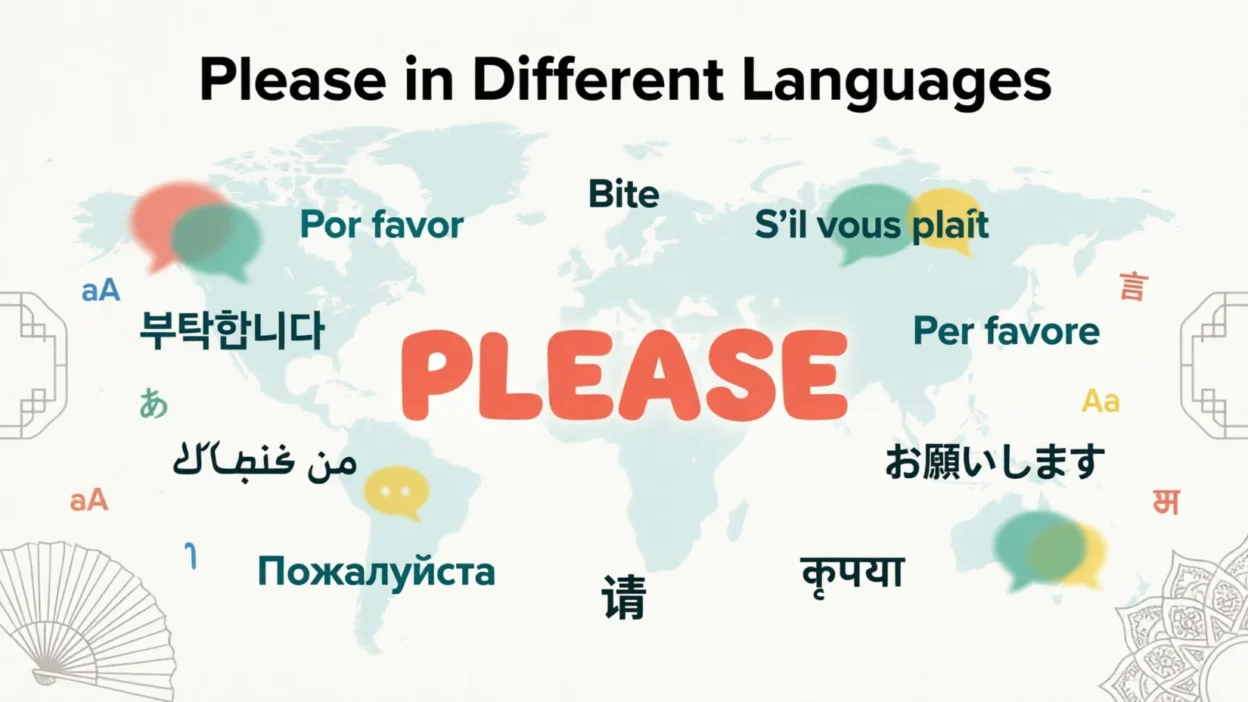
“Please” is one of the most useful and polite words in everyday communication. If you are traveling, learning a new language, speaking with international friends, or simply exploring world languages, knowing how to say “please” can make conversations more respectful and friendly.
This guide explains please in different languages with the correct native phrase, an easy English pronunciation, and a short real-life example. If you are searching for how to say please in different languages, this list provides simple translations that are easy to understand and remember.
The phrase used for “please” can sometimes change depending on the situation, level of formality, or grammar of a language. Some languages use a single word, while others use a phrase that literally means something like “if you please” or “I ask you.”
Below, you will find please in all languages across Europe, Asia, Africa, the Middle East, and other parts of the world. These please translations offer a useful introduction to how politeness is expressed around the world.
Please in Different Languages
| # | Language | Native Phrase | English Pronunciation | Example Sentence | English Meaning |
|---|---|---|---|---|---|
| 1 | English | Please | Pleez | Please sit here. | Please sit here. |
| 2 | Spanish | Por favor | Por fah-VOR | Por favor, come in. | Please, come in. |
| 3 | French | S’il vous plaît | Seel voo pleh | S’il vous plaît, wait. | Please, wait. |
| 4 | German | Bitte | BIT-tuh | Bitte, come here. | Please, come here. |
| 5 | Italian | Per favore | Pehr fah-VOH-reh | Per favore, help me. | Please, help me. |
| 6 | Portuguese | Por favor | Por fah-VOR | Por favor, sit down. | Please, sit down. |
| 7 | Dutch | Alstublieft | Ahl-stu-BLEEFT | Alstublieft, wait here. | Please, wait here. |
| 8 | Swedish | Snälla | SNELL-ah | Snälla, help me. | Please, help me. |
| 9 | Norwegian | Vær så snill | Vair soh sneel | Vær så snill, sit down. | Please, sit down. |
| 10 | Danish | Vær venlig | Vair VEN-lee | Vær venlig, wait. | Please, wait. |
| 11 | Finnish | Ole hyvä | OH-leh HOO-vah | Ole hyvä, sit here. | Please, sit here. |
| 12 | Icelandic | Vinsamlegast | VIN-sam-leh-gast | Vinsamlegast, wait here. | Please, wait here. |
| 13 | Irish | Le do thoil | Leh duh hil | Le do thoil, come in. | Please, come in. |
| 14 | Welsh | Os gwelwch yn dda | Os GWEL-ook un thah | Os gwelwch yn dda, wait. | Please, wait. |
| 15 | Scottish Gaelic | Feuch an dèan thu | Fyakh un dyehn hoo | Feuch an dèan thu seo. | Please do this. |
| 16 | Polish | Proszę | PROH-sheh | Proszę, sit down. | Please, sit down. |
| 17 | Czech | Prosím | PRO-seem | Prosím, wait here. | Please, wait here. |
| 18 | Slovak | Prosím | PRO-seem | Prosím, come in. | Please, come in. |
| 19 | Slovenian | Prosim | PRO-seem | Prosim, help me. | Please, help me. |
| 20 | Croatian | Molim | MOH-leem | Molim, sit down. | Please, sit down. |
| 21 | Serbian | Molim | MOH-leem | Molim, come in. | Please, come in. |
| 22 | Bosnian | Molim | MOH-leem | Molim, wait here. | Please, wait here. |
| 23 | Bulgarian | Моля | MOH-lyah | Моля, седнете. | Please, sit down. |
| 24 | Macedonian | Ве молам | Veh MOH-lam | Ве молам, почекајте. | Please, wait. |
| 25 | Russian | Пожалуйста | Pah-ZHAH-loo-stah | Пожалуйста, садитесь. | Please, sit down. |
| 26 | Ukrainian | Будь ласка | Bood LAS-kah | Будь ласка, зачекайте. | Please, wait. |
| 27 | Belarusian | Калі ласка | Kah-LEE LAS-kah | Калі ласка, пачакайце. | Please, wait. |
| 28 | Lithuanian | Prašau | Prah-SHOW | Prašau, palaukite. | Please, wait. |
| 29 | Latvian | Lūdzu | LOOD-zoo | Lūdzu, apsēdieties. | Please, sit down. |
| 30 | Estonian | Palun | PAH-loon | Palun, istuge. | Please, sit down. |
| 31 | Romanian | Vă rog | Vuh ROHG | Vă rog, așteptați. | Please, wait. |
| 32 | Hungarian | Kérem | KAY-rem | Kérem, üljön le. | Please, sit down. |
| 33 | Greek | Παρακαλώ | Pa-ra-ka-LOH | Παρακαλώ, περιμένετε. | Please, wait. |
| 34 | Albanian | Ju lutem | Yoo LOO-tem | Ju lutem, hyni. | Please, come in. |
| 35 | Turkish | Lütfen | LOOT-fen | Lütfen, bekleyin. | Please, wait. |
| 36 | Maltese | Jekk jogħġbok | Yek YOJ-bok | Jekk jogħġbok, stenna. | Please, wait. |
| 37 | Arabic | من فضلك | Min FAD-lak | من فضلك، انتظر. | Please, wait. |
| 38 | Hebrew | בבקשה | Be-va-ka-SHAH | בבקשה, שב כאן. | Please, sit here. |
| 39 | Persian | لطفاً | LOT-fan | لطفاً، صبر کنید. | Please, wait. |
| 40 | Hindi | कृपया | Kri-pa-YA | कृपया बैठिए। | Please, sit down. |
| 41 | Urdu | براہِ کرم | Ba-rah-e karam | براہِ کرم بیٹھیں۔ | Please, sit down. |
| 42 | Bengali | দয়া করে | DOY-ah KOH-reh | দয়া করে বসুন। | Please, sit down. |
| 43 | Punjabi | ਕਿਰਪਾ ਕਰਕੇ | Kir-pa KAR-ke | ਕਿਰਪਾ ਕਰਕੇ ਬੈਠੋ। | Please, sit down. |
| 44 | Gujarati | કૃપા કરીને | Krip-a KARE-neh | કૃપા કરીને બેસો। | Please, sit down. |
| 45 | Marathi | कृपया | Kri-pa-YA | कृपया बसा. | Please, sit down. |
| 46 | Nepali | कृपया | Kri-pa-YA | कृपया बस्नुहोस्। | Please, sit down. |
| 47 | Sinhala | කරුණාකර | Ka-roo-na-ka-ra | කරුණාකර වාඩිවෙන්න. | Please, sit down. |
| 48 | Tamil | தயவுசெய்து | Tha-ya-vu SEY-thu | தயவுசெய்து உட்காருங்கள். | Please, sit down. |
| 49 | Telugu | దయచేసి | Da-ya-CHEY-see | దయచేసి కూర్చోండి. | Please, sit down. |
| 50 | Kannada | ದಯವಿಟ್ಟು | Da-ya-VIT-too | ದಯವಿಟ್ಟು ಕುಳಿತುಕೊಳ್ಳಿ. | Please, sit down. |
| 51 | Malayalam | ദയവായി | Da-ya-vaayi | ദയവായി ഇരിക്കൂ. | Please, sit down. |
| 52 | Thai | กรุณา | Ka-roo-NAH | กรุณารอสักครู่ | Please wait a moment. |
| 53 | Lao | ກະລຸນາ | Ka-loo-NAH | ກະລຸນາລໍຖ້າ. | Please wait. |
| 54 | Khmer | សូម | Sohm | សូមអង្គុយ។ | Please sit. |
| 55 | Vietnamese | Làm ơn | Lam uhn | Làm ơn chờ tôi. | Please wait for me. |
| 56 | Indonesian | Tolong | Toh-long | Tolong bantu saya. | Please help me. |
| 57 | Malay | Tolong | Toh-long | Tolong tunggu saya. | Please wait for me. |
| 58 | Filipino | Pakiusap | Pa-kee-OO-sap | Pakiusap, maghintay ka. | Please wait. |
| 59 | Chinese (Mandarin) | 请 | Ching | 请坐。 | Please sit. |
| 60 | Japanese | お願いします | Oh-neh-gai shee-mas | お願いします、待ってください。 | Please wait. |
| 61 | Korean | 제발 | Jeh-bal | 제발 기다려 주세요. | Please wait. |
| 62 | Mongolian | Гуйя | Goo-yah | Гуйя, түр хүлээнэ үү. | Please wait a moment. |
| 63 | Georgian | გთხოვთ | Gt-khovt | გთხოვთ, დაჯექით. | Please, sit down. |
| 64 | Armenian | Խնդրում եմ | Khnd-room em | Խնդրում եմ, նստեք. | Please, sit down. |
| 65 | Azerbaijani | Zəhmət olmasa | Zah-met ol-MA-sah | Zəhmət olmasa, gözləyin. | Please, wait. |
| 66 | Swahili | Tafadhali | Ta-fa-DHA-lee | Tafadhali, kaa hapa. | Please, sit here. |
| 67 | Afrikaans | Asseblief | Ah-suh-BLEEF | Asseblief, wag hier. | Please, wait here. |
| 68 | Amharic | እባክዎ | Eh-ba-ku-wo | እባክዎ ይጠብቁ። | Please, wait. |
| 69 | Yoruba | Jọ̀wọ́ | Jaw-woh | Jọ̀wọ́, dúró. | Please, wait. |
| 70 | Zulu | Ngiyacela | Ngee-ah-KAY-la | Ngiyacela, linda. | Please, wait. |
Why Is “Please” Important in Different Languages?
“Please” is more than a simple vocabulary word. It is commonly used to make requests sound polite, respectful, and considerate.
When you learn please in different languages, you also learn something about how people communicate in different cultures. A polite request can help create a positive impression when speaking with native speakers.
For travelers, students, language learners, and international professionals, learning basic polite expressions can make everyday communication much easier.
How to Say “Please” in Different Languages
The easiest way to learn how to say “please” is to connect the native phrase with its pronunciation and a practical sentence.
For example:
- Spanish: Por favor
- French: S’il vous plaît
- German: Bitte
- Italian: Per favore
- Japanese: お願いします
- Chinese: 请
- Arabic: من فضلك
- Hindi: कृपया
- Urdu: براہِ کرم
Some languages have more than one way to express politeness. The correct expression can depend on whether you are speaking formally, informally, making a request, asking for an item, or using “please” in a particular grammatical structure.
Please Translations Around the World
The word “please” does not have one universal equivalent. Different languages express politeness in their own way.
For instance, German uses Bitte, Spanish uses Por favor, and Russian uses Пожалуйста. In Mandarin Chinese, 请 is commonly used to make a request polite, while Japanese often uses expressions such as お願いします depending on the context.
This variety makes please translations especially interesting for language learners. Learning the local expression can help you sound more natural and show respect for the language and culture.
Common Uses of “Please”
The word “please” is commonly used when:
- Making a polite request
- Asking someone to wait
- Asking someone to sit down
- Requesting help
- Ordering food or drinks
- Asking for information
- Making a formal request
- Speaking politely to someone
For example, instead of saying “Give me water,” a polite English speaker may say, “Please give me some water.”
The same basic idea exists in many languages, although the grammatical form may differ.
Tips for Learning “Please” in All Languages
If you want to remember please in all languages, focus on a few phrases at a time rather than trying to memorize the entire list at once.
Start with languages that you frequently hear or use. Learn the native spelling first, then practice the pronunciation. Finally, use the phrase in a short sentence.
For example, learning “Bitte” by itself is useful, but remembering “Bitte, kommen Sie herein” gives you a practical context for using the word.
Listening to native speakers and repeating the phrase several times can also improve pronunciation.
Cultural Importance of Saying “Please”
Politeness can have different cultural expectations around the world. In some languages, the equivalent of “please” is used very frequently. In others, politeness may be communicated through verb forms, honorifics, sentence structure, or other expressions.
Therefore, a direct translation does not always explain every situation in which a native speaker would use the word.
When learning a new language, it is helpful to understand both the translation and the cultural context. This allows you to communicate more naturally and avoid using a phrase in an inappropriate situation.
FAQs:
1. How do you say “please” in different languages?
“Please” has different translations around the world. Common examples include por favor in Spanish, s’il vous plaît in French, bitte in German, per favore in Italian, and please in English.
2. What is “please” in Spanish?
“Please” in Spanish is por favor. It is one of the most common ways to make a request politely.
3. What is “please” in French?
“Please” in French is commonly s’il vous plaît when speaking formally or to more than one person. It is pronounced approximately “seel voo pleh.”
4. What is “please” in Japanese?
A common Japanese expression for “please” is お願いします (onegaishimasu). Its use depends on the situation and the type of request being made.
5. What is the most common meaning of “please”?
“Please” is generally used to make a request more polite. Depending on the language and context, its equivalent may be a single word or a longer polite expression.
Conclusion
Learning please in different languages is a simple but useful way to improve your communication skills. From por favor in Spanish and bitte in German to お願いします in Japanese and कृपया in Hindi, languages around the world have their own ways of expressing politeness.
Knowing these please translations can be especially helpful when traveling, studying languages, meeting international friends, or communicating with native speakers.
Start by learning a few phrases that are relevant to you, practice their pronunciation, and use them in real conversations. Even one polite word can make communication warmer, more respectful, and more natural.

Evelyn Grace is a language enthusiast and content writer at LingoMean, where she explains the meaning of words, phrases, and expressions. She creates clear, practical, and engaging content that helps readers confidently understand what to say in everyday conversations.